250 – A Call to Transform Local Governance: Beyond Disappointment, Toward a Resilient Future

200 words (3 minutes reading time) by Tim Whistler
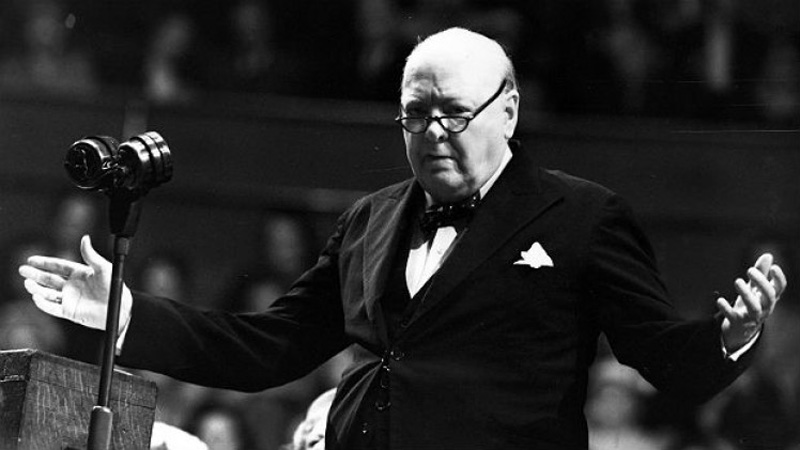
I drafted a response to Colin Weatherby’s post and then decided to ask ChatGPT for help. I was heading down the same path as Colin with a rather dry and technical post. So, I asked ChatGPT to re-write my post as a rousing speech. Something you might hear from someone like Churchill (or me on a soap box).

Here it is.

“Ladies and gentlemen, it’s time to rise above the mundane, the short-sightedness, and the status quo. Colin’s technical jargon may have dulled the urgency of the situation, but let me be clear: what we are witnessing is not just disappointing; it’s nothing short of disastrous.

Are we really going to entrust the future of our councils to mere “minders”? Leaders, they are not, for they are steering our councils toward perilous waters, leaving behind a legacy of mess and irresponsibility.

It’s painfully evident that these so-called leaders are opting for the path of least resistance. They’re making decisions that may be easy for them but detrimental to our communities. It’s time for change, and it starts with our councillors.

Our councillors must possess the skills and determination to hold CEOs accountable, not just for short-term gains but for the long-term well-being of our communities. It’s a challenging task, no doubt. But let’s not forget that some among us are mired in short-term thinking, obsessed with the next election, and their own political fortunes. While they may not represent the majority, they exist.

I recently had a conversation with a seasoned local government CEO, and what he revealed was eye-opening. Many CEOs have thrived simply by keeping the council’s finances in check and maintaining cozy relationships with their councillors. But let me ask you, is this a formula for high-performance governance that meets the needs and expectations of our communities? I think not.

What we need, my friends, is nothing short of a transformation in local government. The rate cap has left our current system teetering on the brink of failure. And relying on OECD thinking alone won’t save us from this impending disaster, nor will it shield our communities from the fallout.

So, I implore you, let’s rally together for change. Let’s demand true leadership, accountability, and a vision for the long-term prosperity of our councils and communities. It’s time to act, for the future of our local government depends on it.

Continue reading

248 – Some recycling.

700 words (8 minutes reading time) by Lancing Farrell with ChatGPT

In the best traditions of blogging, I have started recycling some early posts. To add value I have asked ChatGPT to analyse three posts (Post 103 – Classic paper – ‘Managing Government, Governing Management’ by Henry Mintzberg, Post 229 – Coronavirus and local government – time for a new O/S?, and Post 231 – A New City O/S – Stephen Goldsmith and Neil Kleiman) and re-write them as one post.

Mintzberg challenges traditional perspectives on government organization and management, Goldsmith & Kleiman’s book complements Mintzberg by proposing a comprehensive transformation of local government operations. Both identify the need for flexibility and adaptability in addressing the challenges of governance.

Here is the ChatGPT analysis.

Continue reading

247 – The New Human Movement – Bill Anderson.

1250 words (12 minutes reading time) by Lancing Farrell

Gary Hamel and Michele Zanini wrote Humanocracy – Creating organisations as amazing as the people inside them in 2020. It examined the way organisations have become over-burdened with bureaucracy, which stops workers learning and contributing, and destroys productivity. In it they produced a blueprint for creating organisations that are more resilient, and improve worker’s jobs and productivity at the same time.

Hamel and Zanini describe the legacy of bureaucracy as ‘top-heavy power structures and rule-choked processes that make organisations timid, inertial and incremental’ in the face of disruptive change. This triggered my interest because of the problems facing councils in Victoria who are starting to deal with the spending gap arising from the State imposed rate cap.

The book followed an influential essay in the Harvard Business Review by Hamel and Zanini in 2016 that estimated bureaucracy in the US costs $3 trillion each year, or 17% of GDP. 

From this thinking, the New Human Movement was born through a Youtube channel, where Hamel and Zanini speak to the ‘bold thinkers and radical doers who are reimagining work, leadership and organization for a new age.’ There are now 29 episodes online and they are all worth watching.

I have selected one episode to discuss because I think it has particular relevance to local government in Victoria. It provides a transformation example all councils could follow.

Continue reading

245 – Council BI – some more thinking.

880 words (7 minutes reading time)  by Lancing Farrell

Source: Qlik

Summary

Australian local governments make decisions on a range of issues that impact their communities, such as planning, zoning, environmental management, infrastructure, waste management, community services, traffic management, and economic development. The decisions they make are influenced by legislative requirements, public input, and deliberation among elected officials. The specific responsibilities and decision-making processes of local governments can vary depending on the state or territory in which they are located. The decision-making process typically includes planning and preparation, public consultation, council meetings, decision-making, implementation, and review and evaluation.

In Colin Weatherby’s post on BI, he looked at how it is used by companies and how it might be used by councils. With some assistance from ChatGPT (I am becoming quite a fan), I have tried to drill down to the actual decisions councils make where BI would be useful.

Continue reading

243 – Ken Miller – Myth Buster.

1350 words (12 minutes reading time) by Lancing Farrell

Summary

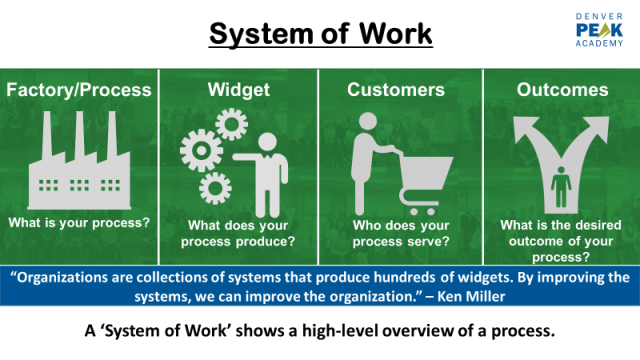
Ken Miller’s book, “We Don’t Make Widgets: Overcoming the Myths That Keep Government from Radically Improving,” presents the author’s experiences of working in government and his insights on the three myths that hinder the improvement of government services. The first myth is that government services are intangible and cannot be measured or managed, unlike widgets in the manufacturing industry. The second myth is that the people receiving government services cannot be considered customers, as they are hostages who cannot make choices about the provider and have competing interests. The third myth is that governments are not here to make a profit, which Miller defines as the private sector’s way of measuring return on investment.

Thank you to Adam Thompson from Zen Organisations for heading me in the direction of Ken Miller and his book ‘We Don’t Make Widgets’, subtitled, Overcoming the Myths That Keep Government from Radically Improving. It is an interesting read from the viewpoint of someone who has worked in government and spent their life trying to improve it.

Ken Miller was an original myth buster.

Continue reading

242 – A Grand Strategy.

850 words (10 minutes reading time) by Colin Weatherby and ChatGPT

A passage from The Book of Local Government:

“And lo, the Local Government was filled with aspirations for the community. But when the State government imposed a rate cap, limiting their capabilities, the leaders knew they must align their aspirations with their limitations through strategy. And Richard Rumelt, a wise strategist, spoke unto them saying “A good strategy addresses the most important and high stakes challenges through a coherent set of analyses, concepts, policies, arguments, and actions.” But many Local Governments strayed from this path, with strategies that lacked a clear central idea and failed to address important problems or opportunities. And Rumelt warned them “If thou fail to identify and analyze the obstacles, thou doth not have a strategy, but instead a stretch goal, a budget or a list of things thou wish would happen.” And the leaders heeded his words, and developed a good strategy to overcome their challenges.”

Source: ChatGPT

I have been inspired for the title of this post by John Lewis Gaddis, who says strategy is necessary for ‘the alignment of potentially unlimited aspirations with necessarily limited capabilities’.  It is strategy that aligns our most important aspirations with our capabilities so that we can achieve them. It is especially important when capabilities are being limited.

Local government is full of aspirations. We deliberately ask the community what they want to create a list of things to do. We don’t wait for them to tell us. Our workers are expert at identifying new needs. We like to say that we really understand community needs and expectations. I suppose, this is where the problem starts when a State government disagrees and decides that people are being charged too much for councils to meet their needs and they introduce a rate cap.

Worse still, is when the State thinks some of those needs should not be met by the council at all or they are being met in ways that are inefficient or frivolous.

“The days of ratepayers footing the bill for Arnold Swarzeneggar impersonators are over.”

Labor leader, Daniel Andrews, 2014

I have recently re-read Richard Rumelt’s book ‘Good Strategy/Bad Strategy’. It is over 10 years old now and remains a classic on strategy. I also read his new book, ‘The Crux’. He has recently described his ideas about strategy as ‘challenge-based strategy’, which is useful when thinking about them in the context of local government. We have challenges.

Continue reading

239 – Zombie councils

500 words (5 minutes reading time) by Tim Whistler

I have read Lancing and Colin’s posts with some interest. As a long-term, self-appointed local government pundit, I don’t think the rate cap can be an existential threat to local government, but it is going to turn councils into zombies. Like zombie companies, councils will become dependent on others for their survival. They will be alive but unable to think or act for themselves. Despite what people would like to think, ultimately, they will be simply the local branch of the state government delivering the services the state decides they must. This is at odds with what many councils currently think they are doing.

“Councils have autonomy to provide services that meet the needs of their local community, and will establish a range of discretionary processes, including local laws, to guide certain activities that can occur within their municipality.”

Municipal Association of Victoria, ‘Vic Councils’ website
Continue reading

238 – Il comune povero- ‘The poor municipality’

1600 words (15 minutes reading time) by Colin Weatherby                                                                                                                

Great post by Lancing Farrell. I like the link to the creative and enduring solutions people have devised in response to food scarcity. Human ingenuity can be a marvellous thing.

The impact of declining financial sustainability on asset management is disturbing. As anyone directly responsible for council assets knows, for many years the biggest challenge for local government in Victoria has been the cost of caring for assets. The Institute of Public Works Engineers (IPWEA) has been advocating for better asset management for years. I would argue that the principal council service is to own and care for assets on behalf of the ‘community. The rate cap has rapidly made this much more difficult, and as Lancing showed, the challenge is not spread evenly across councils.

What can councils do in response to funding scarcity? Will our commitment and creativity help us find new ways to provide the services the community needs and expects? Our own il comune povero.

Continue reading

225 – Why do we struggle to achieve capital expenditure targets?

By Lancing Farrell                                                                                                      1250 words

the planning fallacy.png

I was reaching into the archives to re-run a popular post on how councils fail to complete their targeted amount of capital works each year when a colleague pointed me in the direction of a recent podcast on Freakonomics Radio. The podcast, Here’s Why All Your Projects Are Always Late — and What to Do About It,  provides insights into the nature of the problem facing councils and provides some practical solutions.

You might want to start by reading that post from the archives.

In the podcast several key reasons for projects not being completed on time and within budget are discussed. Those most relevant to local government include the planning fallacy, optimism bias, overconfidence, and strategic misrepresentation.

Let’s start with the planning fallacy.

There are a lot of reasons why that project you planned can take way longer than you anticipated, and cost way more. Outright fraud, for instance — the lying, cheating, and stealing familiar to just about anyone who’s ever had, say, a home renovation … There’s also downright incompetence; that’s hard to plan for. But today we’re talking about the planning fallacy, which was formally described a few decades ago by the psychologists Daniel Kahneman and Amos Tversky.

This quote sets the scene nicely. Lots of things can contribute to a project not being completed on time but our inability to accurately estimate the time required to complete a project sets it up for failure. Continue reading

213 – What insight does the capability review of one council and the sacking of another give you into local government culture in Victoria?

Posted by Colin Weatherby                                                                         1500 words

insight light

Two interesting reports have been published in Victoria in the last 12 months – the Organisational Capability Review of Melbourne City Council in May 2015 and the more recent Commission of Inquiry Report into Greater Geelong City Council, released in March 2016. Each report provides an insight into local government culture.

As someone who has worked at three Victorian councils in the last 10 years, and who corresponds regularly with people working at another half a dozen councils, the insight is not surprising.  It reveals a deep malaise in the sector that has root causes in the political system, the ways our leaders are appointed, and general organisational leadership capability.

To begin, what are the discoveries in these two reviews of major Victorian councils? Continue reading