271 – Victorian government enquiry into local government

1000 words (11 minutes reading time) by Colin Weatherby
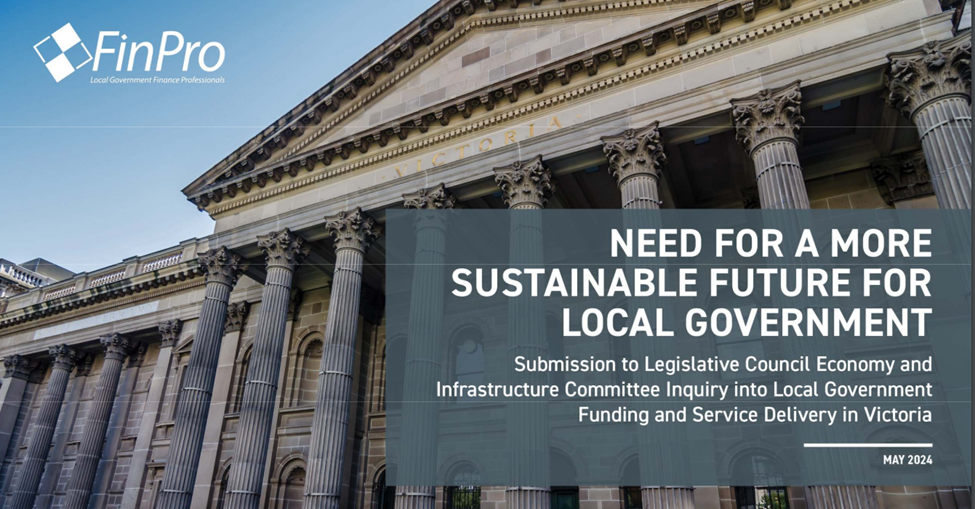
The Victorian state government’s Legislative Council Economy and Infrastructure Committee has started an enquiry in to the funding and service delivery of local government in the state, which will look at:

  • The effects of cost shifting from the state and federal governments to local councils in an examination of vertical and horizontal fiscal imbalances.
  • Whether local councils are adequately delivering on their core service delivery objectives.
  • The overall revenue structure of local government.
  • Whether the existing revenue structure is sustainable and appropriate or if alternative models of funding would be more sustainable and appropriate.
  • Any other related matters.

This is a timely review and comes at the same time that the national government is also holding an enquiry into the financial sustainability of local government. It seems that the other levels of government have become concerned about whether councils are able to meet community needs and expectations now and in the future.

Unsurprisingly, the Local Government Finance Professionals (FinPro) have made a submission to the Victorian enquiry . They make a number of interesting points in their submission.

Continue reading

262 – The other side of the ledger: A cautionary tale for growing councils

1200 words (13 minutes reading time) by Colin Weatherby

A research article in the Australian Journal of Public Administration, titled ‘The other side of the local government ledger — The association between revenue growth and population growth,’ raises a crucial red flag for all councils currently grappling with population growth. The study, by Professor Joseph Drew and his colleagues, sheds light on the relationship between population growth and local government revenue. Professor Drew has made a video explaining the findings of the paper.

In local government, you hear a lot of talk about the rate cap, a limitation on property taxation imposed by the State government on councils, and the impact it is having on councils’ ability to fund services. I have posted previously on what I think councils should be doing in response to the spending gap arising from the rate cap. Most discussion in the sector has focused on the impact on expenditure.

Professor Joseph Drew and his colleagues are suggesting it is equally important, perhaps more important, to understand the impact on unit revenue. Unit revenue, representing the per capita revenue generated by a council, becomes pivotal when service demand stems from individuals residing in the municipality rather than the properties they occupy. The potential mismatch between service consumption drivers and revenue generators poses a substantial financial sustainability risk.

Continue reading

259 – Model Collapse in Local Government: A Performance Measurement Dilemma?

700 words (8 minutes reading time) by Tim Whistler

In the world of artificial intelligence (AI), the concept of model collapse is a well-recognised challenge. Now it is potentially reaching into my everyday life if my Spotify-generated daylist starts to select songs from a previous daylist! Yet, my concern isn’t confined to personal playlists, and it should be echoing through the corridors of local government and raising questions about what performance measurement actually tells us.

Carole Parkinson’s question at the end of her footnote resonates with me: How can we detect model collapse in local government? It may well be a moot question, and model collapse is simply an explanation of the current situation, as one of Carole’s colleagues suggested.  This should become apparent if ChatGPT’s methods to identify model collapse in AI are accurate. Five seem particularly relevant for the local government context:

Continue reading

239 – Zombie councils

500 words (5 minutes reading time) by Tim Whistler

I have read Lancing and Colin’s posts with some interest. As a long-term, self-appointed local government pundit, I don’t think the rate cap can be an existential threat to local government, but it is going to turn councils into zombies. Like zombie companies, councils will become dependent on others for their survival. They will be alive but unable to think or act for themselves. Despite what people would like to think, ultimately, they will be simply the local branch of the state government delivering the services the state decides they must. This is at odds with what many councils currently think they are doing.

“Councils have autonomy to provide services that meet the needs of their local community, and will establish a range of discretionary processes, including local laws, to guide certain activities that can occur within their municipality.”

Municipal Association of Victoria, ‘Vic Councils’ website
Continue reading

238 – Il comune povero- ‘The poor municipality’

1600 words (15 minutes reading time) by Colin Weatherby                                                                                                                

Great post by Lancing Farrell. I like the link to the creative and enduring solutions people have devised in response to food scarcity. Human ingenuity can be a marvellous thing.

The impact of declining financial sustainability on asset management is disturbing. As anyone directly responsible for council assets knows, for many years the biggest challenge for local government in Victoria has been the cost of caring for assets. The Institute of Public Works Engineers (IPWEA) has been advocating for better asset management for years. I would argue that the principal council service is to own and care for assets on behalf of the ‘community. The rate cap has rapidly made this much more difficult, and as Lancing showed, the challenge is not spread evenly across councils.

What can councils do in response to funding scarcity? Will our commitment and creativity help us find new ways to provide the services the community needs and expects? Our own il comune povero.

Continue reading

237 Di necessità virtù – ‘Need gives rise to virtue.’

1500 words (14 minutes reading time) By Lancing Farrell                                                                                     

I was reading an article about la cucina povera, the cuisine created in Italy over centuries based on the food prepared by poor and sometimes starving people. Throughout history, people have experienced food insecurity and famine and they have adapted, but none have done it as well as the Italians.  In Italy, love, ingenuity and scarcity combined to give birth to a new and delicious cuisine that has become mainstream.

I wondered, can a similar thing happen to local government as it is starved of funds and impoverished by the Victorian government’s rate cap?

Continue reading