600 words (7 minutes reading time) by Lancing Farrell
The two previous posts on model collapse and local government have prompted me to think about what has happened in the sector in the last few years. The sudden increase in Ministerial interventions does seem to indicate that something has changed. It may be more than just the introduction of rate capping in 2016.
I started asking colleagues what they think is happening. Unsurprisingly, several had views on what has happened, although no one was definitive. Everyone has anecdotal information from their council. I will have a go at describing the views told to me.
The first colleague reiterated the view put forward by Tim Whistler, that Covid prevented councillors building relationships with each other. It also affected the induction for newly elected councillors, which can be important in clarifying the responsibilities of a councillor, the Council, and the CEO and staff. Roles and responsibilities are cited in Ministerial Terms of Reference in almost all interventions.
700 words (8 minutes reading time) by Tim Whistler
In the world of artificial intelligence (AI), the concept of model collapse is a well-recognised challenge. Now it is potentially reaching into my everyday life if my Spotify-generated daylist starts to select songs from a previous daylist! Yet, my concern isn’t confined to personal playlists, and it should be echoing through the corridors of local government and raising questions about what performance measurement actually tells us.
Carole Parkinson’s question at the end of her footnote resonates with me: How can we detect model collapse in local government? It may well be a moot question, and model collapse is simply an explanation of the current situation, as one of Carole’s colleagues suggested. This should become apparent if ChatGPT’s methods to identify model collapse in AI are accurate. Five seem particularly relevant for the local government context:
700 words (8 minutes reading time) by Carole Parkinson
In many aspects of human endeavor, the belief that successive generations inherently improve holds true. Take sports, for example, where each Olympics sees records shattered by athletes who are better selected, trained, and conditioned than their predecessors. This continuous improvement is driven by a powerful incentive for each generation to surpass the achievements of the previous one.
However, this upward trajectory doesn’t always apply. In the realm of artificial intelligence (AI), there’s a phenomenon known as model collapse. Without diverse human-generated training data, AI systems risk malfunctioning if inundated with AI-generated content. The first generation of AI benefits from drawing on decades of human ingenuity, but as subsequent generations draw from their own created information, the pool of new ideas dwindles, resulting in a homogenised output.
800 Words (9 minutes reading time) by Colin Weatherby
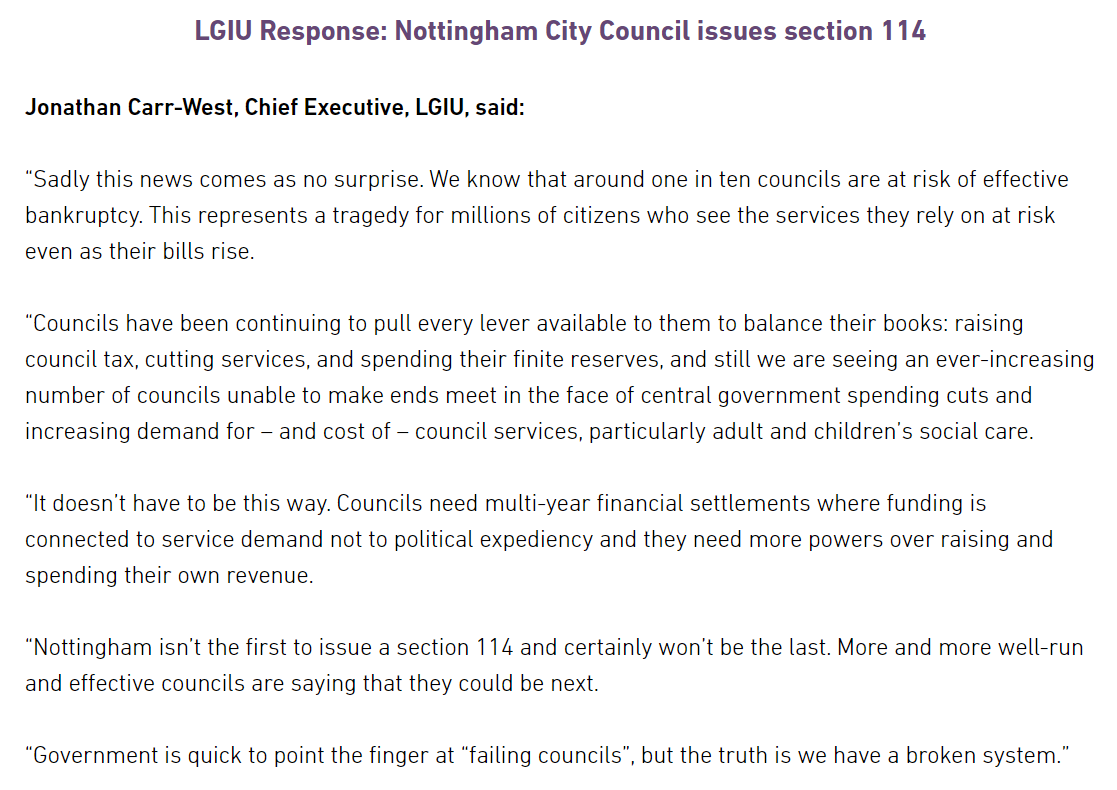
I was reading the latest Local Government Information Unit (LGIU) newsletter from the UK and the news item in the image above caught my attention. Although the cause of the problem is central government cutting funding to councils, not imposition of a rate cap, it has the same effect on council finances and reinforces the view I expressed in my posts about the effects of the rate cap (‘Il comune povero- ‘The poor municipality’ and ‘Rate Capping – the final words (from our future))’. Councils in Victorian can respond by trying to improve current services and increase revenue, find efficiencies and reduce waste in operations, and they will still be unable to meet community needs and expectations within their available resources.
In Victoria, councils cannot issue a section 114, which in the UK means that all spending, apart from on protecting vulnerable people and providing statutory services, will be suspended. Instead, the Victorian government sends in Monitors to oversee council decisions, and then, if the council doesn’t respond as the State requires, they can dismiss the council and appoint Administrators to run the council. In the past, this has resulted in decisions being made by the unelected Administrators to sell community assets, cut services and make whatever changes they think are necessary to get the council back in the black. This tends not to meet community needs and expectations either.
580 words (7 minutes reading time) by Lancing Farrell
In a thought-provoking post titled ‘OECD Solutions,’ Colin Weatherby examined decision-making by those suffering from OECD, shedding light on the prevalence of single-loop learning over its more nuanced counterpart, double-loop learning. The implications of this choice, as Weatherby suggests, go beyond the surface, hinting at a deliberate oversight of systemic causes.
850 words (9 minutes reading time) by Colin Weatherby
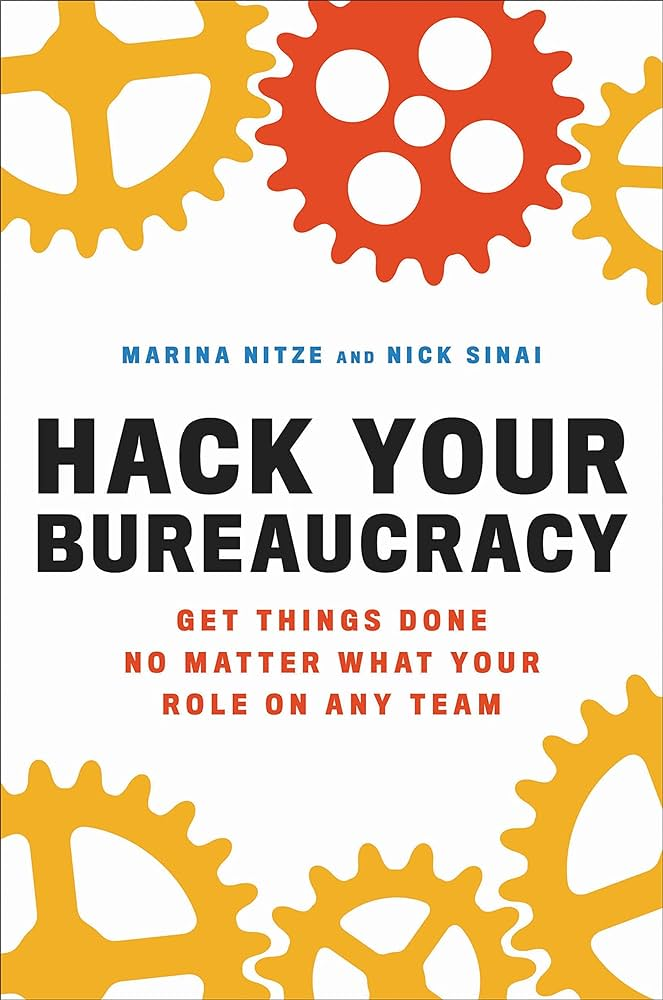
As regular readers will know, we are partial to a good book that throws some light on the issues facing local government. The idea that knowledge of theory should underpin practice, or that learning how others have solved the problems you face can provide useful insights, is, unfortunately, not always valued as much as it should be
My latest read is an interesting book. ‘Hack Your Bureaucracy – Get Things Done No Matter What your Role on any Team’ is presented as a ‘how to manual’ of tips and tricks to work within bureaucracy to, unsurprisingly, ‘get things done’.
870 words (10 minutes reading time) by Colin Weatherby
I was talking to a former colleague recently and she described the decision making by her new CEO as ‘OECD’. I asked her what she meant. She said that when faced with any decision, the CEO would look for solutions that are:
O = obvious (i.e. he won’t have to explain the decision because it will be obvious to everyone).
E = easy (i.e. easy to act on the decision and within his capability to implement it).
C = cheap (i.e. it won’t cost any more money to act on the decision or it will immediately cost less).
D = done (i.e. when action has been taken, the result will be obvious to everyone).
Mintzberg challenges traditional perspectives on government organization and management, Goldsmith & Kleiman’s book complements Mintzberg by proposing a comprehensive transformation of local government operations. Both identify the need for flexibility and adaptability in addressing the challenges of governance.
1250 words (12 minutes reading time) by Lancing Farrell
Gary Hamel and Michele Zanini wrote ‘Humanocracy – Creating organisations as amazing as the people inside them‘ in 2020. It examined the way organisations have become over-burdened with bureaucracy, which stops workers learning and contributing, and destroys productivity. In it they produced a blueprint for creating organisations that are more resilient, and improve worker’s jobs and productivity at the same time.
Hamel and Zanini describe the legacy of bureaucracy as ‘top-heavy power structures and rule-choked processes that make organisations timid, inertial and incremental’ in the face of disruptive change. This triggered my interest because of the problems facing councils in Victoria who are starting to deal with the spending gap arising from the State imposed rate cap.
From this thinking, the New Human Movement was born through a Youtube channel, where Hamel and Zanini speak to the ‘bold thinkers and radical doers who are reimagining work, leadership and organization for a new age.’ There are now 29 episodes online and they are all worth watching.
I have selected one episode to discuss because I think it has particular relevance to local government in Victoria. It provides a transformation example all councils could follow.
850 words (10 minutes reading time) by Colin Weatherby and ChatGPT
A passage from The Book of Local Government:
“And lo, the Local Government was filled with aspirations for the community. But when the State government imposed a rate cap, limiting their capabilities, the leaders knew they must align their aspirations with their limitations through strategy. And Richard Rumelt, a wise strategist, spoke unto them saying “A good strategy addresses the most important and high stakes challenges through a coherent set of analyses, concepts, policies, arguments, and actions.” But many Local Governments strayed from this path, with strategies that lacked a clear central idea and failed to address important problems or opportunities. And Rumelt warned them “If thou fail to identify and analyze the obstacles, thou doth not have a strategy, but instead a stretch goal, a budget or a list of things thou wish would happen.” And the leaders heeded his words, and developed a good strategy to overcome their challenges.”
Source: ChatGPT
I have been inspired for the title of this post by John Lewis Gaddis, who says strategy is necessary for ‘the alignment of potentially unlimited aspirations with necessarily limited capabilities’. It is strategy that aligns our most important aspirations with our capabilities so that we can achieve them. It is especially important when capabilities are being limited.
Local government is full of aspirations. We deliberately ask the community what they want to create a list of things to do. We don’t wait for them to tell us. Our workers are expert at identifying new needs. We like to say that we really understand community needs and expectations. I suppose, this is where the problem starts when a State government disagrees and decides that people are being charged too much for councils to meet their needs and they introduce a rate cap.
Worse still, is when the State thinks some of those needs should not be met by the council at all or they are being met in ways that are inefficient or frivolous.
“The days of ratepayers footing the bill for Arnold Swarzeneggar impersonators are over.”
Labor leader, Daniel Andrews, 2014
I have recently re-read Richard Rumelt’s book ‘Good Strategy/Bad Strategy’. It is over 10 years old now and remains a classic on strategy. I also read his new book, ‘The Crux’. He has recently described his ideas about strategy as ‘challenge-based strategy’, which is useful when thinking about them in the context of local government. We have challenges.








 Local Government Utopia