275 – My council’s value for money statement

680 words (7 minutes reading time) by Tim Whistler

Some of the posts on this site really test your patience. There can be just too much idealistic thinking.

Personally, the idea of a Value for Money Statement seems to me to be the latest invention of councils trying to find a new way to pretend they are doing something that they are not. The name says it all. If this is not an example of John Gall’s ‘operational fallacy’, I don’t know what is. Along with Financial Sustainability Strategies, it is a distraction from the serious work councils need to do to fundamentally change what they are doing.

Anyway, it started me thinking about my local council and what they could write about their way of providing me with value for money – assuming they were prepared to be honest. Here is my attempt to describe what I can discern about the principles behind how they actually think they provide value for money:

Continue reading

274 – The Wigan Deal and Value for Money

1500 words (17 minutes reading time) by Carole Parkinson

The Wigan Value for Money Statement

Lancing Farrell’s post on Wigan and the Deal 2030 explains how a council has successfully decided to make a radical change in the relationship with its community in response to austerity measures imposed by central government. By all accounts the Deal 2030 has been successful in reducing the resources needed for the council to deliver its services, in large part by reducing demand for those services by helping people to do things for themselves or to access services provided by the VCFSE (voluntary, community, faith and social enterprise) and private sectors.

It is 10 years since the Deal 2030 was launched. As with any big organisational change, it is hard to evaluate its success from the outside. To help us, there have been several reviews of the Deal 2030 since it was implemented, including the King’s Fund (2019), the Centre for Policy Impact (2019), and a Corporate Peer Challenge (2017). All have reported favourably on both the success in implementing actions in the Deal, and the impact of those actions on the Wigan community. Therefore, it was with some interest that I saw Wigan Council has recently released a Value for Money Statement.

Perhaps everything is not what it appears?

Continue reading

273 – Can councils learn from the local football club?

1300 words (14 minutes reading time) by Colin Weatherby

 Great Coach 2.0

Some time ago I wrote a post about council performance measurement being like a dashboard on a car. I used the image of a dashboard like the one on my 1962 Morris Mini to keep it very simple. I noted that the car dashboard had evolved over many years and been refined to be a distillation of information to the minimum required for a driver to be in control of their car. It didn’t tell the driver where they were going or if they were on track to get there. I was hoping it would be an example councils could follow. Lately, I have turned my attention to sport.

Australian rules football and statistics

It is football season in Australia, and I was reading about how footy clubs, professional and amateur, are using data and statistics to measure and improve their performance. It started me thinking. Every council in Australia must have a local footy club. Perhaps they can learn something from them?

Continue reading

272 – What is the big deal about the Wigan Deal?

1200 words (13 minutes reading time) by Lancing Farrell

In his post on the Victorian local government enquiry, Colin Weatherby mentioned the Wigan Deal as an example of how councils can avoid the politics of sacrifice – i.e. being forced to give up what you have today – and instead move to the politics of transition – i.e. finding better ways in the future. It seems like a no brainer to me and I am sure every elected representative would agree that this would be better politics. Unfortunately, they are not necessarily getting to make the decision – or, if they are, they are being given limited options by their bureaucracy about the decision they can make.

Strategic versus operational decisions

As an aside, this has been a point of contention in Victoria where the Local Government Act restricts councillors to making ‘strategic decisions’, while the CEO and staff make ‘operational decisions’. The definition of each type of decision seems to be quite flexible. For anyone wanting to see how this plays out, watch the Mornington peninsula Shire Council meeting on the 28 May 2024 at the 4 hour and 25 minute mark. Fascinating.

In contrast, the Wigan Deal was created and implemented with the commitment and direction of both elected representatives and the organisational leaders.

Continue reading

270 – Local government and Financial Sustainability Strategies

2850 words (30 minutes reading time) by Colin Weatherby

Councils across Australia have recently started developing financial sustainability strategies. This sounds like a good idea, but is it?  Are the goals in these strategies realistic and achievable? Do they seriously address fundamental issues affecting sustainability or are they just another distraction? The latest fad?

To kick this post off, let’s look at 3 councils, Logan Council in Queensland, Central Coast Council in New South Wales, and Yarra City Council in Victoria.

It is a long post but worth the effort!

Financial sustainability and corporate planning

Given the parlous condition of council finances and the existential threat from rate capping in NSW and Victoria, it is interesting to see where the financial sustainability strategy fits into organisational planning for councils.

Continue reading

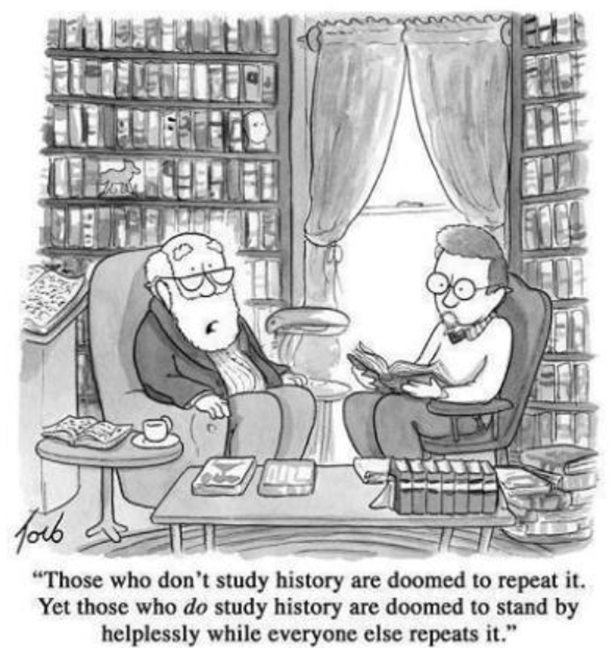
268 – Local government history – repeating, rhyming or informing?

900 words (10 minutes reading time) by Colin Weatherby

Image

I believe that it is important to understand how we have gotten to where we are today if we are proposing to make changes, simply so that we can benefit from past learnings and avoid repeating mistakes at the expense of the community. I like to see evidence backing a proposal that commits significant community resources to doing something.  Call me old fashioned (and people sometimes do) but I figure it is what a careful professional does.

Having always worked with public infrastructure, I know decisions made today have ramifications for another 50 to 100 years. No one builds a road or plants a tree thinking only about the next 5 years. I have cursed short cuts made decades ago by my predecessors when I have been required to sort out difficult problems. My approach is typically characterised by colleagues as time wasting in their haste to get on with trying out the latest management fad and, potentially, just doing wrong things righter.

This post is an attempt to unpick what has happened in Victorian local government to get us to where we are, and understand what it means for what councils should do next. My concern is that councils faced with the failure of existing approaches, as evidenced by the imposition of the rate cap (effectively a taxpayer revolt!), will then double down in doing the things that leaders know how to do. If it is not history repeating, it will at least be rhyming as Mark Twain observed. Better still, it is neither and it becomes informing.

Continue reading

266 – System governance or Smartie sorting?


400 words (5 minutes reading time) by Tim Whistler

Saying that system governance is the key to paradigm change is stating the obvious. Any way of thinking about change requires existing power structures to be understood and for the people controlling those power structures to be given incentives to start thinking and behaving differently. We see it happening every day.

A friend who works as a consultant to various councils was explaining her work to me recently. She was dumbing it down for me and used the analogy of cake decoration. She said her role is the equivalent of helping community to sort out Smarties to pick colours to decorate the council cake. Everyone knows people have favourite Smartie colours, and there will be the ‘right’ colours for the cake. Without knowing exactly who will be eating the cake it can be tricky, and a lot of effort goes into talking to the community about the colour of the Smarties.

Continue reading

263 – System governance is the key to shifting the local government paradigm

850 words (9 minutes reading time) by Lancing Farrell

The need for a new paradigm in local government in Victoria has been mentioned in a few posts recently (see 241 – Rate capping – the final words (from our future), 253 – Minds Change: My Journey to Transform Local Government Performance, and 261 – Reinventing Local Government). Model collapse, as described by Carole Parkinson and Tim Whistler, signals the end of an existing paradigm. This raises critical questions about the current paradigm in local government and the need for change. A recent podcast in the Reimagining Government series by the Centre for Public Impact, ‘What on earth is a paradigm shift?’, discusses paradigms and provides insights and practical tips for those wanting to bring about transformative change.

Defining Paradigms

The podcast features host Adrian Brown and Professor Toby Lowe from the Centre for Public Impact, Henk-Jan Dekker from the International Centre for Environmental Research and Development, and Jessica Studdert from think tank ‘New Local’. Drawing on the work of Thomas Kuhn and Margaret Masterman, a paradigm was defined as a ‘grand explanatory narrative for how a part of the world works’.  It operates on metaphysical, sociological, and exemplar levels, shaping perceptions of what exists and what should be valued. Understanding how paradigms work is crucial for those seeking systemic change in local government.

Continue reading

262 – The other side of the ledger: A cautionary tale for growing councils

1200 words (13 minutes reading time) by Colin Weatherby

A research article in the Australian Journal of Public Administration, titled ‘The other side of the local government ledger — The association between revenue growth and population growth,’ raises a crucial red flag for all councils currently grappling with population growth. The study, by Professor Joseph Drew and his colleagues, sheds light on the relationship between population growth and local government revenue. Professor Drew has made a video explaining the findings of the paper.

In local government, you hear a lot of talk about the rate cap, a limitation on property taxation imposed by the State government on councils, and the impact it is having on councils’ ability to fund services. I have posted previously on what I think councils should be doing in response to the spending gap arising from the rate cap. Most discussion in the sector has focused on the impact on expenditure.

Professor Joseph Drew and his colleagues are suggesting it is equally important, perhaps more important, to understand the impact on unit revenue. Unit revenue, representing the per capita revenue generated by a council, becomes pivotal when service demand stems from individuals residing in the municipality rather than the properties they occupy. The potential mismatch between service consumption drivers and revenue generators poses a substantial financial sustainability risk.

Continue reading

254 – Hacking your bureaucracy

850 words (9 minutes reading time) by Colin Weatherby

As regular readers will know, we are partial to a good book that throws some light on the issues facing local government. The idea that knowledge of theory should underpin practice, or that learning how others have solved the problems you face can provide useful insights, is, unfortunately, not always valued as much as it should be

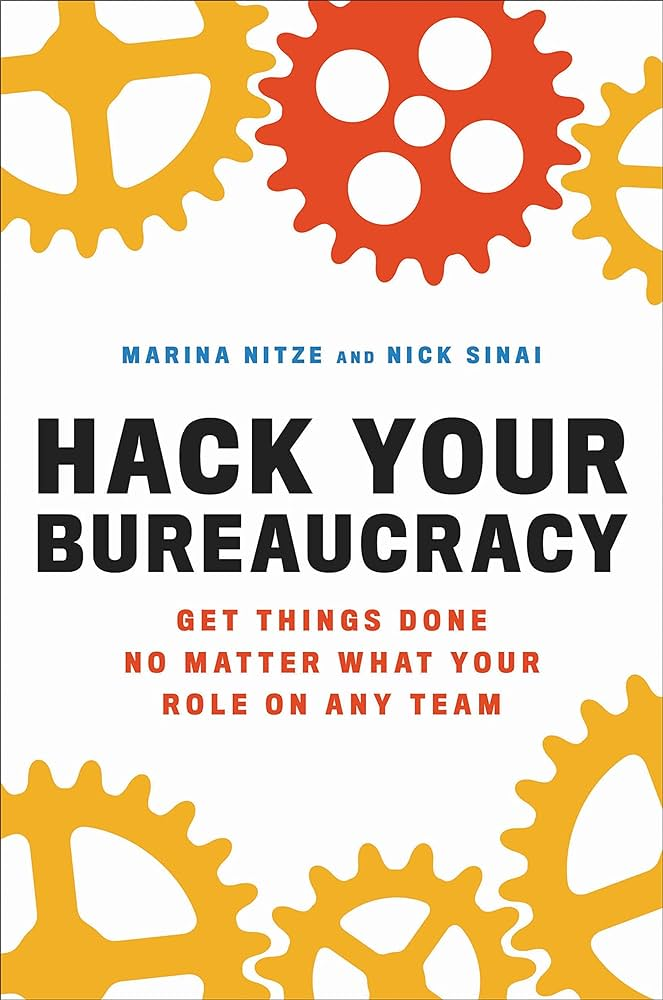
My latest read is an interesting book.  ‘Hack Your Bureaucracy – Get Things Done No Matter What your Role on any Team’ is presented as a ‘how to manual’ of tips and tricks to work within bureaucracy to, unsurprisingly, ‘get things done’.

Continue reading