260 – Ministerial Interventions in Local Government

600 words (7 minutes reading time) by Lancing Farrell

The two previous posts on model collapse and local government have prompted me to think about what has happened in the sector in the last few years. The sudden increase in Ministerial interventions does seem to indicate that something has changed. It may be more than just the introduction of rate capping in 2016.

I started asking colleagues what they think is happening. Unsurprisingly, several had views on what has happened, although no one was definitive. Everyone has anecdotal information from their council. I will have a go at describing the views told to me.

The first colleague reiterated the view put forward by Tim Whistler, that Covid prevented councillors building relationships with each other. It also affected the induction for newly elected councillors, which can be important in clarifying the responsibilities of a councillor, the Council, and the CEO and staff. Roles and responsibilities are cited in Ministerial Terms of Reference in almost all interventions.

Continue reading

259 – Model Collapse in Local Government: A Performance Measurement Dilemma?

700 words (8 minutes reading time) by Tim Whistler

In the world of artificial intelligence (AI), the concept of model collapse is a well-recognised challenge. Now it is potentially reaching into my everyday life if my Spotify-generated daylist starts to select songs from a previous daylist! Yet, my concern isn’t confined to personal playlists, and it should be echoing through the corridors of local government and raising questions about what performance measurement actually tells us.

Carole Parkinson’s question at the end of her footnote resonates with me: How can we detect model collapse in local government? It may well be a moot question, and model collapse is simply an explanation of the current situation, as one of Carole’s colleagues suggested.  This should become apparent if ChatGPT’s methods to identify model collapse in AI are accurate. Five seem particularly relevant for the local government context:

Continue reading

258 – Model Collapse or Cultural Evolution? Mental Models and Victorian Local Government

700 words (8 minutes reading time) by Carole Parkinson

In many aspects of human endeavor, the belief that successive generations inherently improve holds true. Take sports, for example, where each Olympics sees records shattered by athletes who are better selected, trained, and conditioned than their predecessors. This continuous improvement is driven by a powerful incentive for each generation to surpass the achievements of the previous one.

However, this upward trajectory doesn’t always apply. In the realm of artificial intelligence (AI), there’s a phenomenon known as model collapse. Without diverse human-generated training data, AI systems risk malfunctioning if inundated with AI-generated content. The first generation of AI benefits from drawing on decades of human ingenuity, but as subsequent generations draw from their own created information, the pool of new ideas dwindles, resulting in a homogenised output.

Continue reading

257 – Austerity and Victorian local government

800 Words (9 minutes reading time) by Colin Weatherby

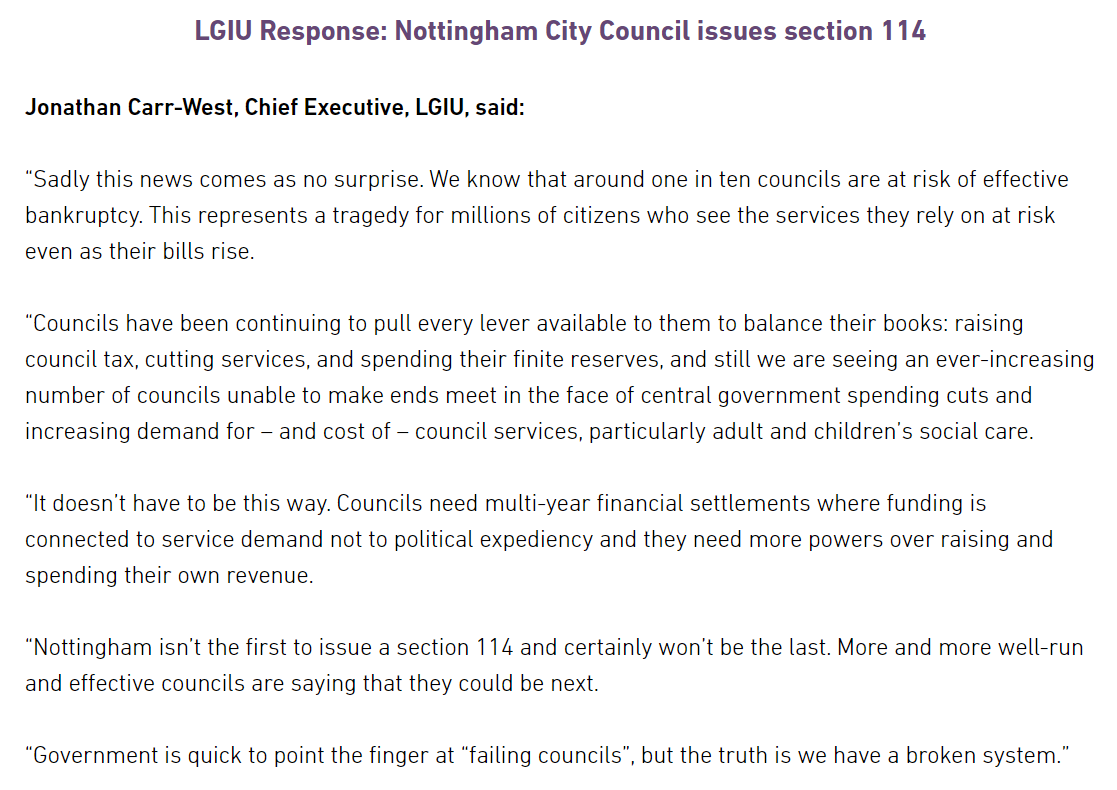
I was reading the latest Local Government Information Unit (LGIU) newsletter from the UK and the news item in the image above caught my attention. Although the cause of the problem is central government cutting funding to councils, not imposition of a rate cap, it has the same effect on council finances and reinforces the view I expressed in my posts about the effects of the rate cap (‘Il comune povero- ‘The poor municipality’ and ‘Rate Capping – the final words (from our future))’. Councils in Victorian can respond by trying to improve current services and increase revenue, find efficiencies and reduce waste in operations, and they will still be unable to meet community needs and expectations within their available resources.

In Victoria, councils cannot issue a section 114, which in the UK means that all spending, apart from on protecting vulnerable people and providing statutory services, will be suspended. Instead, the Victorian government sends in Monitors to oversee council decisions, and then, if the council doesn’t respond as the State requires, they can dismiss the council and appoint Administrators to run the council. In the past, this has resulted in decisions being made by the unelected Administrators to sell community assets, cut services and make whatever changes they think are necessary to get the council back in the black. This tends not to meet community needs and expectations either.

Continue reading

256 – Navigating the Reductionist Loop in OECD Decision-Making

580 words (7 minutes reading time) by Lancing Farrell

In a thought-provoking post titled ‘OECD Solutions,’ Colin Weatherby examined decision-making by those suffering from OECD, shedding light on the prevalence of single-loop learning over its more nuanced counterpart, double-loop learning. The implications of this choice, as Weatherby suggests, go beyond the surface, hinting at a deliberate oversight of systemic causes.

Image source

Continue reading

254 – Hacking your bureaucracy

850 words (9 minutes reading time) by Colin Weatherby

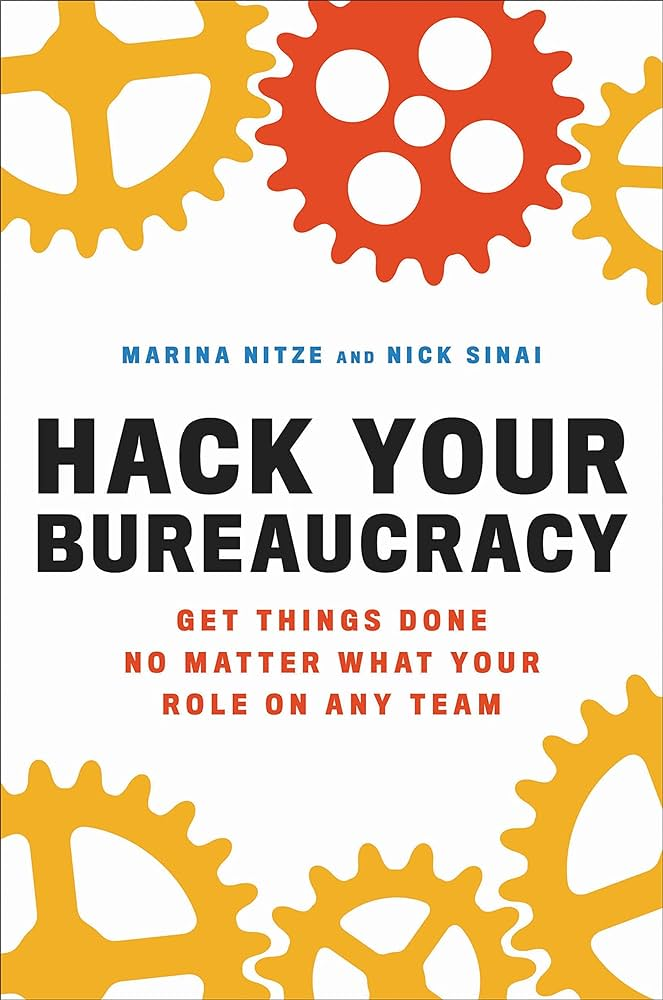
As regular readers will know, we are partial to a good book that throws some light on the issues facing local government. The idea that knowledge of theory should underpin practice, or that learning how others have solved the problems you face can provide useful insights, is, unfortunately, not always valued as much as it should be

My latest read is an interesting book.  ‘Hack Your Bureaucracy – Get Things Done No Matter What your Role on any Team’ is presented as a ‘how to manual’ of tips and tricks to work within bureaucracy to, unsurprisingly, ‘get things done’.

Continue reading

253 – Minds Change: My Journey to Transform Local Government Performance

600 words (7 minutes reading time) by Lancing Farrell

Have you ever had that eureka moment where something you were trying to understand is suddenly made crystal clear to you? That’s exactly what happened to me after reading David McRaney’s thought-provoking book, ‘How Minds Change – The New Science of Belief, Opinion, and Persuasion.’ This enlightening read gave me reason to revisit some past posts on improving local government performance. In reading the book (and this is deliberate by the author) I was led through Piaget’s stages of assimilation and accommodation, before eventually reaching a Kuhnian paradigm shift. My epiphany was realising why organisational change is so hard.

When I looked back at my earlier posts, I realised that my growth as a leader accelerated when I first saw work as a system. At the same time, I genuinely believed that I needed to become the architect of better approaches. I had an academic background, experience of travelling overseas to broaden my outlook, and a relentless passion for my work. I thought that if anyone could revolutionise services, it would be me.

However, this view eventually transformed into a more holistic and community-oriented perspective as I started to see the work as a ‘frog’ system, not a ‘bike’ system. You’ll need to read my previous posts to grasp the analogy, but in essence, I transitioned from a thinking I needed to be a one-man show and lead others by giving them better ways, to a more participatory approach where everyone is engaged in finding improvements.

Continue reading

252 – Preserving the Essence of Citizenship: A Plea for Traditional Values in Local Governance

700 words (8 minutes reading time) by Lancing Farrell

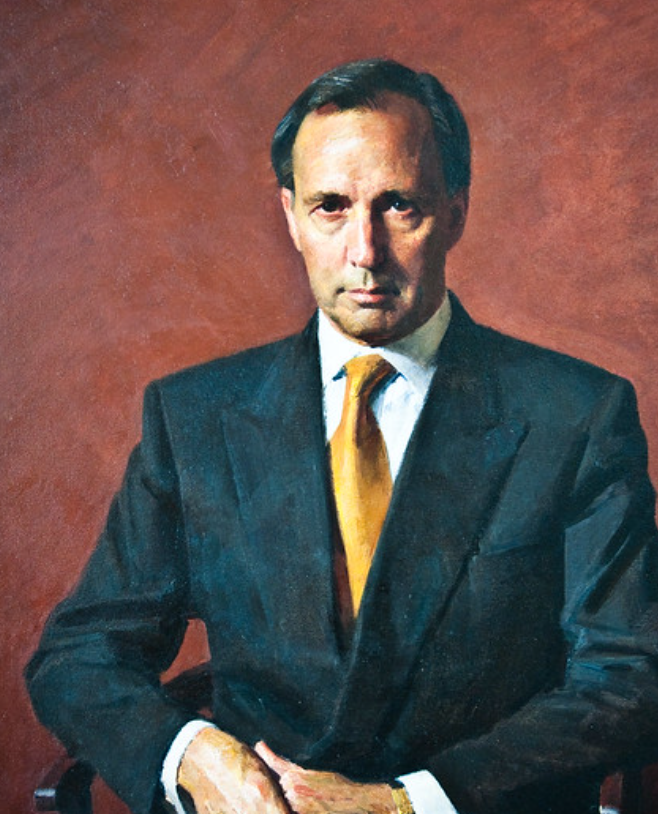
Former Prime Minister, Paul Keating

I have been reading an MBA thesis written by an experienced local government CEO in 1999. It looks in detail at performance measurement and discusses many aspects of local government management in a thought provoking way. I have been reflecting on how much or how little has changed since then and whether or not the expectation evident in the writing, i.e. that the major reforms endured by the sector in the 1990s would herald improved performance, have been realised.

I selected the insight into citizenship and consumerism to draft a short post. Rather than test your patience with my detailed analysis, I asked ChatGPT to craft my notes into a speech in the style of former Australian Prime Minister Paul Keating.

Enjoy.

Ladies and gentlemen,

In the realm of local governance, we witnessed tides of transformation during the 1990s, as corporate management and managerialism made their grand entrance. These management practices, often lauded for their prowess, introduced a new lexicon into the world of local governance, terms like ‘client,’ ‘customer,’ and ‘consumer,’ now marching in lockstep with our cherished ‘citizen.’ Three decades on, it is imperative that we hold fast to the timeless values of traditional governance and citizenship.

Continue reading

251 – Commotion Inaction

180 words (2 minutes reading time) by Gordon Brittas

Image source

In my days at the helm, I used the phrase ‘Commotion Inaction’ to describe behaviour like OECD.

It isn’t a recognised term (well, not yet) but its meaning is clear. ‘Commotion’ refers to a state of noisy or turbulent activity, often involving a lot of movement and noise. ‘Inaction’ means the failure to take necessary steps to address a situation.

Therefore, Commotion Inaction is when there is a lot of noise or activity, but no effective action is being taken. It describes a situation where people are busy but not achieving any meaningful results due to a lack of purposeful action.

Commotion Inaction is a lot of activity for no meaningful result.

Gordon Brittas

Feel free to use it.

Here are a few tips on how you use it in everyday workplace conversations:

  1. “Are you saying we have tried it before without success and we are doing it again? It sounds like Commotion Inaction”.
  2. “The bosses say just do it. They aren’t interested in the data to understand if it will work. Commotion Inaction, yet again!”
  3. “This is going to be a difficult decision and there could be some real risks in making it. We need Commotion Inaction.”

Ah, its good to be back.

250 – A Call to Transform Local Governance: Beyond Disappointment, Toward a Resilient Future

200 words (3 minutes reading time) by Tim Whistler

I drafted a response to Colin Weatherby’s post and then decided to ask ChatGPT for help. I was heading down the same path as Colin with a rather dry and technical post. So, I asked ChatGPT to re-write my post as a rousing speech. Something you might hear from someone like Churchill (or me on a soap box).

Here it is.

“Ladies and gentlemen, it’s time to rise above the mundane, the short-sightedness, and the status quo. Colin’s technical jargon may have dulled the urgency of the situation, but let me be clear: what we are witnessing is not just disappointing; it’s nothing short of disastrous.

Are we really going to entrust the future of our councils to mere “minders”? Leaders, they are not, for they are steering our councils toward perilous waters, leaving behind a legacy of mess and irresponsibility.

It’s painfully evident that these so-called leaders are opting for the path of least resistance. They’re making decisions that may be easy for them but detrimental to our communities. It’s time for change, and it starts with our councillors.

Our councillors must possess the skills and determination to hold CEOs accountable, not just for short-term gains but for the long-term well-being of our communities. It’s a challenging task, no doubt. But let’s not forget that some among us are mired in short-term thinking, obsessed with the next election, and their own political fortunes. While they may not represent the majority, they exist.

I recently had a conversation with a seasoned local government CEO, and what he revealed was eye-opening. Many CEOs have thrived simply by keeping the council’s finances in check and maintaining cozy relationships with their councillors. But let me ask you, is this a formula for high-performance governance that meets the needs and expectations of our communities? I think not.

What we need, my friends, is nothing short of a transformation in local government. The rate cap has left our current system teetering on the brink of failure. And relying on OECD thinking alone won’t save us from this impending disaster, nor will it shield our communities from the fallout.

So, I implore you, let’s rally together for change. Let’s demand true leadership, accountability, and a vision for the long-term prosperity of our councils and communities. It’s time to act, for the future of our local government depends on it.

Continue reading