252 – Preserving the Essence of Citizenship: A Plea for Traditional Values in Local Governance

700 words (8 minutes reading time) by Lancing Farrell

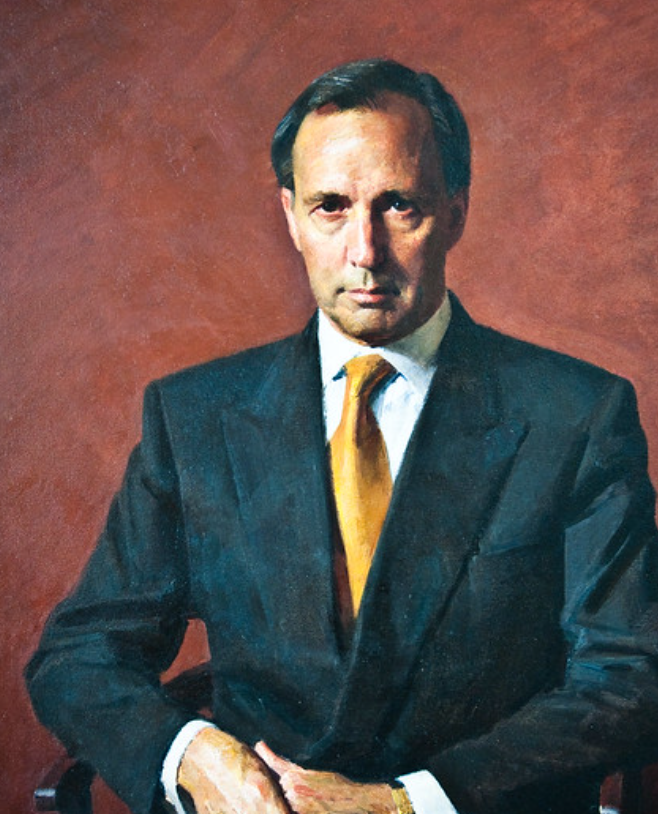
Former Prime Minister, Paul Keating

I have been reading an MBA thesis written by an experienced local government CEO in 1999. It looks in detail at performance measurement and discusses many aspects of local government management in a thought provoking way. I have been reflecting on how much or how little has changed since then and whether or not the expectation evident in the writing, i.e. that the major reforms endured by the sector in the 1990s would herald improved performance, have been realised.

I selected the insight into citizenship and consumerism to draft a short post. Rather than test your patience with my detailed analysis, I asked ChatGPT to craft my notes into a speech in the style of former Australian Prime Minister Paul Keating.

Enjoy.

Ladies and gentlemen,

In the realm of local governance, we witnessed tides of transformation during the 1990s, as corporate management and managerialism made their grand entrance. These management practices, often lauded for their prowess, introduced a new lexicon into the world of local governance, terms like ‘client,’ ‘customer,’ and ‘consumer,’ now marching in lockstep with our cherished ‘citizen.’ Three decades on, it is imperative that we hold fast to the timeless values of traditional governance and citizenship.

Continue reading

251 – Commotion Inaction

180 words (2 minutes reading time) by Gordon Brittas

Image source

In my days at the helm, I used the phrase ‘Commotion Inaction’ to describe behaviour like OECD.

It isn’t a recognised term (well, not yet) but its meaning is clear. ‘Commotion’ refers to a state of noisy or turbulent activity, often involving a lot of movement and noise. ‘Inaction’ means the failure to take necessary steps to address a situation.

Therefore, Commotion Inaction is when there is a lot of noise or activity, but no effective action is being taken. It describes a situation where people are busy but not achieving any meaningful results due to a lack of purposeful action.

Commotion Inaction is a lot of activity for no meaningful result.

Gordon Brittas

Feel free to use it.

Here are a few tips on how you use it in everyday workplace conversations:

  1. “Are you saying we have tried it before without success and we are doing it again? It sounds like Commotion Inaction”.
  2. “The bosses say just do it. They aren’t interested in the data to understand if it will work. Commotion Inaction, yet again!”
  3. “This is going to be a difficult decision and there could be some real risks in making it. We need Commotion Inaction.”

Ah, its good to be back.

250 – A Call to Transform Local Governance: Beyond Disappointment, Toward a Resilient Future

200 words (3 minutes reading time) by Tim Whistler

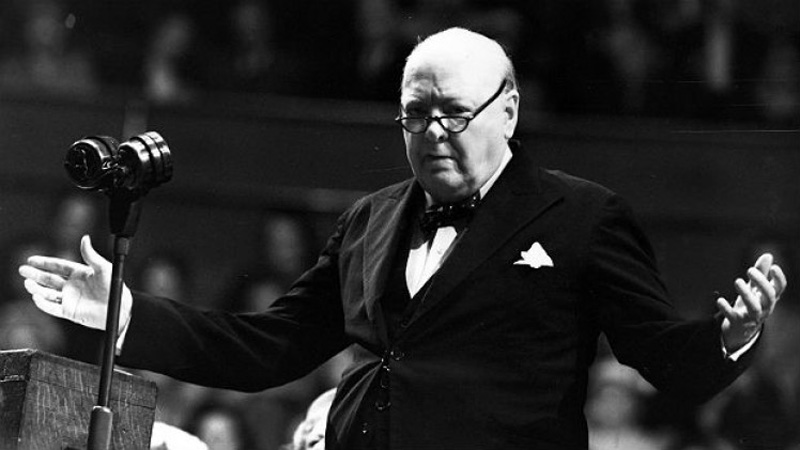
I drafted a response to Colin Weatherby’s post and then decided to ask ChatGPT for help. I was heading down the same path as Colin with a rather dry and technical post. So, I asked ChatGPT to re-write my post as a rousing speech. Something you might hear from someone like Churchill (or me on a soap box).

Here it is.

“Ladies and gentlemen, it’s time to rise above the mundane, the short-sightedness, and the status quo. Colin’s technical jargon may have dulled the urgency of the situation, but let me be clear: what we are witnessing is not just disappointing; it’s nothing short of disastrous.

Are we really going to entrust the future of our councils to mere “minders”? Leaders, they are not, for they are steering our councils toward perilous waters, leaving behind a legacy of mess and irresponsibility.

It’s painfully evident that these so-called leaders are opting for the path of least resistance. They’re making decisions that may be easy for them but detrimental to our communities. It’s time for change, and it starts with our councillors.

Our councillors must possess the skills and determination to hold CEOs accountable, not just for short-term gains but for the long-term well-being of our communities. It’s a challenging task, no doubt. But let’s not forget that some among us are mired in short-term thinking, obsessed with the next election, and their own political fortunes. While they may not represent the majority, they exist.

I recently had a conversation with a seasoned local government CEO, and what he revealed was eye-opening. Many CEOs have thrived simply by keeping the council’s finances in check and maintaining cozy relationships with their councillors. But let me ask you, is this a formula for high-performance governance that meets the needs and expectations of our communities? I think not.

What we need, my friends, is nothing short of a transformation in local government. The rate cap has left our current system teetering on the brink of failure. And relying on OECD thinking alone won’t save us from this impending disaster, nor will it shield our communities from the fallout.

So, I implore you, let’s rally together for change. Let’s demand true leadership, accountability, and a vision for the long-term prosperity of our councils and communities. It’s time to act, for the future of our local government depends on it.

Continue reading

249 – OECD solutions.

870 words (10 minutes reading time) by Colin Weatherby

I was talking to a former colleague recently and she described the decision making by her new CEO as ‘OECD’.  I asked her what she meant. She said that when faced with any decision, the CEO would look for solutions that are:

O = obvious (i.e. he won’t have to explain the decision because it will be obvious to everyone).

E = easy (i.e. easy to act on the decision and within his capability to implement it).

C = cheap (i.e. it won’t cost any more money to act on the decision or it will immediately cost less).

D = done (i.e. when action has been taken, the result will be obvious to everyone).

I asked her how this was working out for her.

Continue reading

248 – Some recycling.

700 words (8 minutes reading time) by Lancing Farrell with ChatGPT

In the best traditions of blogging, I have started recycling some early posts. To add value I have asked ChatGPT to analyse three posts (Post 103 – Classic paper – ‘Managing Government, Governing Management’ by Henry Mintzberg, Post 229 – Coronavirus and local government – time for a new O/S?, and Post 231 – A New City O/S – Stephen Goldsmith and Neil Kleiman) and re-write them as one post.

Mintzberg challenges traditional perspectives on government organization and management, Goldsmith & Kleiman’s book complements Mintzberg by proposing a comprehensive transformation of local government operations. Both identify the need for flexibility and adaptability in addressing the challenges of governance.

Here is the ChatGPT analysis.

Continue reading

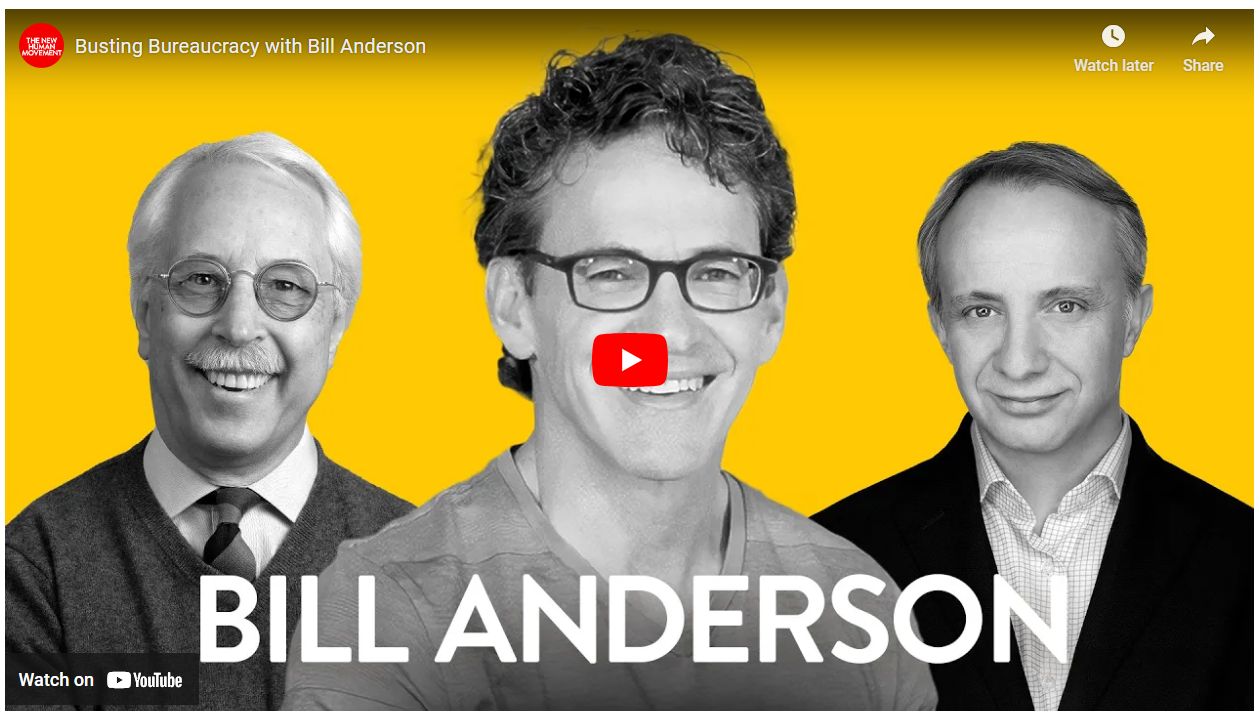
247 – The New Human Movement – Bill Anderson.

1250 words (12 minutes reading time) by Lancing Farrell

Gary Hamel and Michele Zanini wrote Humanocracy – Creating organisations as amazing as the people inside them in 2020. It examined the way organisations have become over-burdened with bureaucracy, which stops workers learning and contributing, and destroys productivity. In it they produced a blueprint for creating organisations that are more resilient, and improve worker’s jobs and productivity at the same time.

Hamel and Zanini describe the legacy of bureaucracy as ‘top-heavy power structures and rule-choked processes that make organisations timid, inertial and incremental’ in the face of disruptive change. This triggered my interest because of the problems facing councils in Victoria who are starting to deal with the spending gap arising from the State imposed rate cap.

The book followed an influential essay in the Harvard Business Review by Hamel and Zanini in 2016 that estimated bureaucracy in the US costs $3 trillion each year, or 17% of GDP. 

From this thinking, the New Human Movement was born through a Youtube channel, where Hamel and Zanini speak to the ‘bold thinkers and radical doers who are reimagining work, leadership and organization for a new age.’ There are now 29 episodes online and they are all worth watching.

I have selected one episode to discuss because I think it has particular relevance to local government in Victoria. It provides a transformation example all councils could follow.

Continue reading

246 – Local Government Utopia: 100,000 views by 57,000 readers in 187 countries.  

600 words (7 minutes reading time) by Lancing Farrell 

It is 8 years since Local Government Utopia started and this post looks back at what has happened.

A lot has been written on the blog covering a wide range of topics. People often suggest to me that the blog would make a good book. There are over 250,000 words in the posts so far. Enough for 25 books. Publishing a book is likely to be less effective than a blog. A non-fiction book is considered successful when 10,000 copies are sold – that’s only 10,000 readers! 

Plus, a blog makes reading cheap and easy.  

I have done some basic analysis of the most popular posts and where readers live in the world. 

Continue reading

245 – Council BI – some more thinking.

880 words (7 minutes reading time)  by Lancing Farrell

Source: Qlik

Summary

Australian local governments make decisions on a range of issues that impact their communities, such as planning, zoning, environmental management, infrastructure, waste management, community services, traffic management, and economic development. The decisions they make are influenced by legislative requirements, public input, and deliberation among elected officials. The specific responsibilities and decision-making processes of local governments can vary depending on the state or territory in which they are located. The decision-making process typically includes planning and preparation, public consultation, council meetings, decision-making, implementation, and review and evaluation.

In Colin Weatherby’s post on BI, he looked at how it is used by companies and how it might be used by councils. With some assistance from ChatGPT (I am becoming quite a fan), I have tried to drill down to the actual decisions councils make where BI would be useful.

Continue reading

244 – Council BI.

1300 words (12 minutes reading time) by Colin Weatherby

Source: ChatGPT

I am trying a new approach with this post and using ChatGPT to provide a summary with short and long versions to match your reading appetite. It might be a little repetitive if you read them all but it will reinforce the key points! Your feedback will be appreciated.

Summary

Business intelligence (BI) is a set of techniques and tools used to analyse data and make informed decisions. It is widely accepted in the private sector but is still evolving in local government where data collection is mainly driven by performance reporting requirements. However, with the financial challenges faced by councils, many are starting to adopt a ‘BI approach’ to understanding their financial position and improving decision-making. Councils can benefit from a BI approach that is tailored to their specific challenges and priorities to support performance monitoring, decision-making, and service delivery to the community.

Short version

Recently, I was talking with a colleague about the financial information they were using to understand the impact of rate capping on the financial sustainability and resilience of their council. This led us to discuss what kind of business intelligence councils need.

Business intelligence, or BI, is defined in the image above. In the private sector, BI is widely accepted and standardised, and there are consultants who provide these services to companies. Companies know what decisions they need to make and that the data to support those decisions is available, they just need it to be discovered, collated, and analysed. However, in the council sector, access to data and data collection is typically driven by performance reporting requirements, rather than a the need for improved data in decision-making.

Businesses use BI for various purposes, including decision-making, performance monitoring, trend analysis, data-driven planning, competitive advantage, and fraud detection. Councils, on the other hand, may have different priorities and challenges. While competitiveness may not be a high priority, customer satisfaction and loyalty can still have a significant impact on the council. The recent financial crunch due to rate capping and high inflation has prompted some councils to start using BI to understand their financial position over time.

Therefore, it’s beneficial for councils to adopt a BI approach that incorporates their specific challenges and priorities to support decision-making and performance monitoring. This can include data analysis, performance monitoring, requirements gathering, process improvement, and budgeting and financial analysis. The goal of BI in local government is to improve decision-making, increase efficiency and effectiveness, and enhance the delivery of services to the community.

Keep going if you are interested in a more detailed discussion.

Continue reading

243 – Ken Miller – Myth Buster.

1350 words (12 minutes reading time) by Lancing Farrell

Summary

Ken Miller’s book, “We Don’t Make Widgets: Overcoming the Myths That Keep Government from Radically Improving,” presents the author’s experiences of working in government and his insights on the three myths that hinder the improvement of government services. The first myth is that government services are intangible and cannot be measured or managed, unlike widgets in the manufacturing industry. The second myth is that the people receiving government services cannot be considered customers, as they are hostages who cannot make choices about the provider and have competing interests. The third myth is that governments are not here to make a profit, which Miller defines as the private sector’s way of measuring return on investment.

Thank you to Adam Thompson from Zen Organisations for heading me in the direction of Ken Miller and his book ‘We Don’t Make Widgets’, subtitled, Overcoming the Myths That Keep Government from Radically Improving. It is an interesting read from the viewpoint of someone who has worked in government and spent their life trying to improve it.

Ken Miller was an original myth buster.

Continue reading