285 – Our first podcast: Challenges, solutions and future directions in local government.

1800 words (18 minutes reading and/or 20 minutes listening) by Colin Weatherby

I recently found out about Notebooklm and asked it to analyse the entire Local Government Utopia website and answer a set of questions about challenges, solutions and future directions for councils.

The question and answer is below. First, a bit about Notebooklm.

Notebooklm

Notebooklm is a new AI product that takes a specific source or sources nominated by you and provides a summary, or answers to questions you ask about the source or sources that you have uploaded. I loaded the URL for localgovernmentutopia.com but could have loaded pdfs or other types of sources (or combinations of sources). You can load up to 50 different sources with a maximum of 500,000 words.

The person who told me about it had uploaded a manual for their camera as a source and then asked how to change the camera battery. Instead of leafing through a massive pdf manual online, Notebooklm explained how to change the battery with a link directly to the relevant section in the manual!

It also produces podcasts, primarily to help listeners understand complicated topics by hearing a discussion between two people about the source or sources. I was interested in this feature, so I had a go!

Podcast

I asked Notebooklm to make a podcast addressing this question using the Local Government Utopia website as a source:

What does Local Government Utopia say about what a local government putting the wellbeing of its constituents first looks like; what issues are important and currently not acknowledged in local government; what are current research or policy gaps in local government; any thoughts around recent Commonwealth or Victorian parliamentary inquiries into local government; and finally, what thoughts are there on where public policy might be able to make a meaningful contribution.

Here is the podcast.

Continue reading
281 – Reframing the reframing…

800 words (8 minutes reading time) by Tim Whistler

Whilst Lancing Farrell has penned an interesting , and no doubt useful, piece on reframing, I think it doesn’t go nearly far enough. Councils are going to remain on a downward trajectory to crisis while they fail to make major changes in the way they think and act.

I have a much shorter list of changes that councils could make and should make. If they don’t, I fear that there will be massive financial failure and the sacking of councils and their CEOs, mainly because they are unable to make decisions where there are no winners, followed by the imposition of State control through the appointment of administrators and forced amalgamations.

Continue reading

279 – ‘Guerilla volunteering’ – a response to risk aversion and red tape?

1200 words (12 minutes reading) by Colin Weatherby

A recent article in the Melbourne Age by Alan Attwood, entitled ‘Red tape’s strangling volunteering – creating more casualties than you’d think’, is timely in drawing attention to a growing problem in Victorian local government. Risk aversion and red tape are making it difficult for people to volunteer in their own community or even get a job at their council. This focus on playing safe seems to be counterproductive.

As Sidney Dekker and Georgina Poole point out succinctly in ‘Random Noise – Measuring Your Company’s Safety Performance‘, most organisations don’t exist simply to be safe; they exist to provide a product or service. It is unfortunate that many councils seem to be starting to think otherwise. Dekker uses the term ‘safety theatre’ to describe the superficial and often misleading efforts that organisations put into safety. I can’t help thinking that some of the risk management red tape making volunteering more difficult fits that description.

Continue reading

271 – Victorian government enquiry into local government

1000 words (11 minutes reading time) by Colin Weatherby

The Victorian state government’s Legislative Council Economy and Infrastructure Committee has started an enquiry in to the funding and service delivery of local government in the state, which will look at:

  • The effects of cost shifting from the state and federal governments to local councils in an examination of vertical and horizontal fiscal imbalances.
  • Whether local councils are adequately delivering on their core service delivery objectives.
  • The overall revenue structure of local government.
  • Whether the existing revenue structure is sustainable and appropriate or if alternative models of funding would be more sustainable and appropriate.
  • Any other related matters.

This is a timely review and comes at the same time that the national government is also holding an enquiry into the financial sustainability of local government. It seems that the other levels of government have become concerned about whether councils are able to meet community needs and expectations now and in the future.

Unsurprisingly, the Local Government Finance Professionals (FinPro) have made a submission to the Victorian enquiry . They make a number of interesting points in their submission.

Continue reading

270 – Local government and Financial Sustainability Strategies

2850 words (30 minutes reading time) by Colin Weatherby

Councils across Australia have recently started developing financial sustainability strategies. This sounds like a good idea, but is it?  Are the goals in these strategies realistic and achievable? Do they seriously address fundamental issues affecting sustainability or are they just another distraction? The latest fad?

To kick this post off, let’s look at 3 councils, Logan Council in Queensland, Central Coast Council in New South Wales, and Yarra City Council in Victoria.

It is a long post but worth the effort!

Financial sustainability and corporate planning

Given the parlous condition of council finances and the existential threat from rate capping in NSW and Victoria, it is interesting to see where the financial sustainability strategy fits into organisational planning for councils.

Continue reading

268 – Local government history – repeating, rhyming or informing?

900 words (10 minutes reading time) by Colin Weatherby

Image

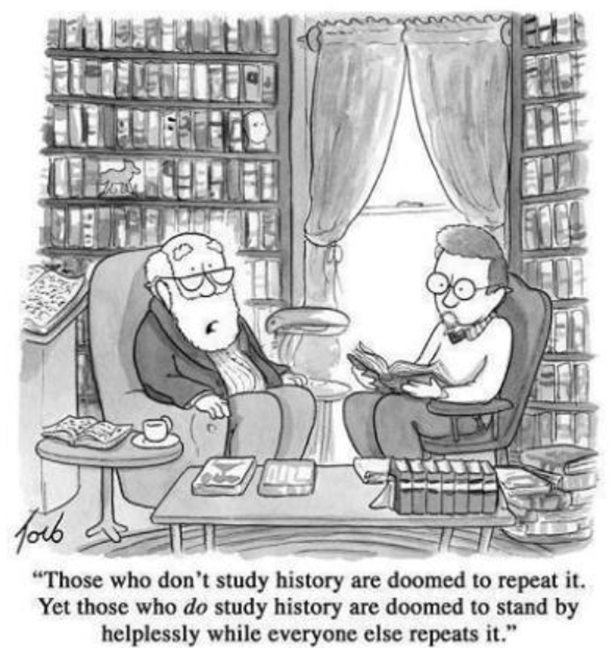
I believe that it is important to understand how we have gotten to where we are today if we are proposing to make changes, simply so that we can benefit from past learnings and avoid repeating mistakes at the expense of the community. I like to see evidence backing a proposal that commits significant community resources to doing something.  Call me old fashioned (and people sometimes do) but I figure it is what a careful professional does.

Having always worked with public infrastructure, I know decisions made today have ramifications for another 50 to 100 years. No one builds a road or plants a tree thinking only about the next 5 years. I have cursed short cuts made decades ago by my predecessors when I have been required to sort out difficult problems. My approach is typically characterised by colleagues as time wasting in their haste to get on with trying out the latest management fad and, potentially, just doing wrong things righter.

This post is an attempt to unpick what has happened in Victorian local government to get us to where we are, and understand what it means for what councils should do next. My concern is that councils faced with the failure of existing approaches, as evidenced by the imposition of the rate cap (effectively a taxpayer revolt!), will then double down in doing the things that leaders know how to do. If it is not history repeating, it will at least be rhyming as Mark Twain observed. Better still, it is neither and it becomes informing.

Continue reading

266 – System governance or Smartie sorting?


400 words (5 minutes reading time) by Tim Whistler

Saying that system governance is the key to paradigm change is stating the obvious. Any way of thinking about change requires existing power structures to be understood and for the people controlling those power structures to be given incentives to start thinking and behaving differently. We see it happening every day.

A friend who works as a consultant to various councils was explaining her work to me recently. She was dumbing it down for me and used the analogy of cake decoration. She said her role is the equivalent of helping community to sort out Smarties to pick colours to decorate the council cake. Everyone knows people have favourite Smartie colours, and there will be the ‘right’ colours for the cake. Without knowing exactly who will be eating the cake it can be tricky, and a lot of effort goes into talking to the community about the colour of the Smarties.

Continue reading

264 – ‘What on earth is a paradigm shift?’ – Centre for Public Impact

400 words (5 minutes reading time) by Colin Weatherby

I have been experimenting with Microsoft’s ‘everyday AI companion’, called Copilot. I asked it to analyse the podcast ‘What on earth is a paradigm shift?’ by the Centre for Public Impact.  I am not trying to second guess the great work by Lancing Farrell, simply to show how some new technology works!

This is what it came back with:

The podcast ‘What on earth is a paradigm shift?’ by the Centre for Public Impact (CPI), is a  conversation between Adrian Brown and Professor Toby Lowe, who are both part of the CPI team. They discuss the concept of paradigms and how they apply to public service and systems change.

Here is a brief summary of the podcast:

Continue reading

262 – The other side of the ledger: A cautionary tale for growing councils

1200 words (13 minutes reading time) by Colin Weatherby

A research article in the Australian Journal of Public Administration, titled ‘The other side of the local government ledger — The association between revenue growth and population growth,’ raises a crucial red flag for all councils currently grappling with population growth. The study, by Professor Joseph Drew and his colleagues, sheds light on the relationship between population growth and local government revenue. Professor Drew has made a video explaining the findings of the paper.

In local government, you hear a lot of talk about the rate cap, a limitation on property taxation imposed by the State government on councils, and the impact it is having on councils’ ability to fund services. I have posted previously on what I think councils should be doing in response to the spending gap arising from the rate cap. Most discussion in the sector has focused on the impact on expenditure.

Professor Joseph Drew and his colleagues are suggesting it is equally important, perhaps more important, to understand the impact on unit revenue. Unit revenue, representing the per capita revenue generated by a council, becomes pivotal when service demand stems from individuals residing in the municipality rather than the properties they occupy. The potential mismatch between service consumption drivers and revenue generators poses a substantial financial sustainability risk.

Continue reading