286 – Abundance, Regulation and Council Costs

2000 words (18 minutes reading time) by Lancing Farrell

I might be drawing a long bow, but I think the Abundance agenda presents a fundamental challenge for those councils trying to find a way forward that is financially sustainable in a rate capped environment. It opens the door to reviewing regulatory and other service design to make savings and support economic growth.

Let me start at the beginning.

On 19 June 2025, in an article about a speech by Jim Chalmers, the Australian Treasurer, he was quoted as saying that left-leaning governments (as we currently have in Australia) are “strangling their own good intentions with bureaucracy”. He is asking regulators across the nation to identify regulations that can be axed or simplified to reduce compliance costs and increase the pace of economic growth. It is part of delivering a supply-side solution to the nation’s housing and energy problems by removing government-imposed impediments to production of goods and services.

Continue reading

284 – The Public Service Chain Reaction.

1700 words (18 minutes reading time) by Carole Parkinson

The Deming chain reaction

Tim Whistler cuts straight to the chase. In the case of his latest piece, I think he could do with a little nuancing of what he is proposing. His description of the disruption to ensue if councils can’t manage their finances with a rate cap is probably accurate, but also, avoidable.

I have been talking to executives at councils and it is true that they are grappling with defining and agreeing on what they need to do. Everyone involved in leadership seems to be pulling in a different direction – Finance wants direct funding cuts to balance budgets now; Directors want efficiency drives to fit services into budgets as soon as possible; Councillors want to cut services they think the State should provide and avoid electoral backlash when they stand for re-election in 2028. It is a vicious cycle.

I have a more immediate approach, which neatly fits with Whistler’s focus on infrastructure as the big service, allocating capital first, and, most importantly, reducing expenditure where you should, not just where you think you can.

Continue reading

255 – Navigating Efficiency and Effectiveness in Local Government

520 words (6 minutes reading time) by Tim Whistler

Recently, I have been thinking about the dichotomy between effectiveness and efficiency. It is becoming a focal point in assessing how councils perceive and measure their performance.

Peter Drucker’s insights, encapsulated in “The Effective Executive,” draw a clear distinction between effectiveness and efficiency. Effectiveness, he says, is about selecting the right goals and attaining them, with the emphasis on doing the right things. On the other hand, efficiency revolves around optimising available resources to achieve those goals, with the emphasis on doing things right.

Effectiveness is doing the right things. Efficiency is doing things right.

Peter Drucker
Continue reading

252 – Preserving the Essence of Citizenship: A Plea for Traditional Values in Local Governance

700 words (8 minutes reading time) by Lancing Farrell

Former Prime Minister, Paul Keating

I have been reading an MBA thesis written by an experienced local government CEO in 1999. It looks in detail at performance measurement and discusses many aspects of local government management in a thought provoking way. I have been reflecting on how much or how little has changed since then and whether or not the expectation evident in the writing, i.e. that the major reforms endured by the sector in the 1990s would herald improved performance, have been realised.

I selected the insight into citizenship and consumerism to draft a short post. Rather than test your patience with my detailed analysis, I asked ChatGPT to craft my notes into a speech in the style of former Australian Prime Minister Paul Keating.

Enjoy.

Ladies and gentlemen,

In the realm of local governance, we witnessed tides of transformation during the 1990s, as corporate management and managerialism made their grand entrance. These management practices, often lauded for their prowess, introduced a new lexicon into the world of local governance, terms like ‘client,’ ‘customer,’ and ‘consumer,’ now marching in lockstep with our cherished ‘citizen.’ Three decades on, it is imperative that we hold fast to the timeless values of traditional governance and citizenship.

Continue reading

243 – Ken Miller – Myth Buster.

1350 words (12 minutes reading time) by Lancing Farrell

Summary

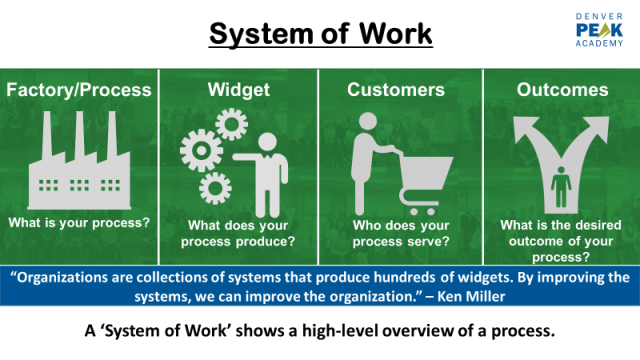
Ken Miller’s book, “We Don’t Make Widgets: Overcoming the Myths That Keep Government from Radically Improving,” presents the author’s experiences of working in government and his insights on the three myths that hinder the improvement of government services. The first myth is that government services are intangible and cannot be measured or managed, unlike widgets in the manufacturing industry. The second myth is that the people receiving government services cannot be considered customers, as they are hostages who cannot make choices about the provider and have competing interests. The third myth is that governments are not here to make a profit, which Miller defines as the private sector’s way of measuring return on investment.

Thank you to Adam Thompson from Zen Organisations for heading me in the direction of Ken Miller and his book ‘We Don’t Make Widgets’, subtitled, Overcoming the Myths That Keep Government from Radically Improving. It is an interesting read from the viewpoint of someone who has worked in government and spent their life trying to improve it.

Ken Miller was an original myth buster.

Continue reading

240 – In the beginning …

1000 words (10 minutes reading time) by Carole Davidson

The posts so far about the impact of the rate cap explain what is happening, but do they really help to work out what to do about it? Councils can tighten their belts and, perhaps, raise alternative revenues to replace lost rates. My question is will that be enough?

I thought I would go back to the beginning. Why did the Victorian Labor government think the rate cap was needed and what were they hoping to achieve? I am pretty sure that unless they see the changes in local government that they were after, they will not change their position. Even if they did, it is my understanding that the rate cap has bipartisan support, so the opposition will need to agree or they will simply reintroduce it if they win office.

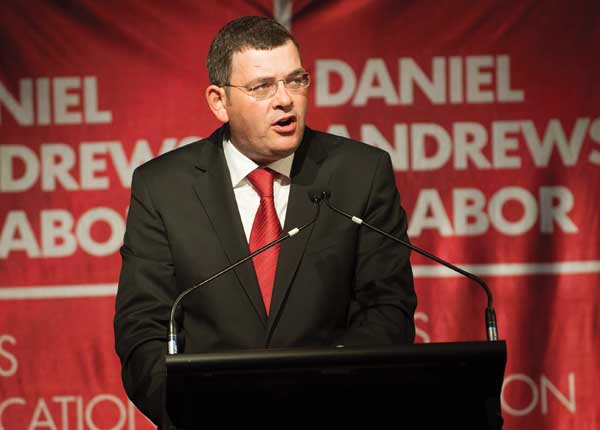
The earliest information I can find is a report in The Age on 4 May 2014 saying that the then Labor opposition leader Daniel Andrews was promising a rate cap if his party were to be successful in the election being held in November that year. Their stated intention was to give ratepayers a ‘fair go’. Under the rate cap, councils would have to detail where every dollar they spend goes.

“The days of ratepayers footing the bill for Arnold Swarzeneggar impersonators are over”

Source: State councils must cap rates under Labor plan, The Age 4 May 2014
Continue reading

235 – My experience of management thinking in local government – Part 3: The frustrating years.

1000 words (9 minutes reading time)                                                        by Lancing Farrell

management experience pt 3

This is the last post on my experience of management thinking in local government. Writing about it makes it seem like a long haul. With hindsight, there have been lots of interesting ideas, many with potential value to improve services, but few with any practical method to make them useful. And less with a way to implement them across a diverse organisation like a council.

Sometime around 2017 I went back to seriously read more of John Seddon’s writing about the Vanguard Method. At this time, Vanguard had a launch for their Australian office in Melbourne, and I went along. Several Australian organisations, public and private, talked about their experience using the Vanguard Method. I wanted to know more. In 2018 I had the opportunity to fly to London and attend a masterclass on digital transformation being held by Vanguard. I met John Seddon and other senior staff from Vanguard. I also spoke with people from local government in the UK who had experience with the Vanguard Method.

This was fortuitous in the development of my thinking. After three decades I had arrived at an understanding of local government and the way it works that made me think systems thinking was the best way to improve the performance of services. The Vanguard Method provides a way to implement systems thinking that has been tested and proven in local government. It provides the method lacking in Public Value. It works with the culture prevalent at many councils. Continue reading

223 – Risk management in local government

By Lancing Farrell                                                                                                  730 words

risk taking

Image

Is there a delegation for taking risks at your council? Does your council have a risk appetite? Are the strategic risks that have been identified appropriate? Are the operational risks relevant? Does the audit program decrease or increase risk?

These are questions that a colleague raised with me recently when trying to understand the way risks were managed at their council. I suggested they look at their risk management framework – how is risk assessed in terms of likelihood and consequence. This should explain the inherent risk, current risk rating, the target risk and rate the effectiveness of controls. It can make interesting reading.

Next, I suggested they look for their organisations lists of key risks – strategic and operational. These are usually in the risk register. This isn’t always easy to find. Someone in the risk department will have it. Most councils will have up to 8-12 strategic risks. There will be many more operational risks.

Councils are very risk aware. Some people describe it as risk aversion. I think this is driven by the multiple accountabilities that councils live with – the Minister for Local Government, the Ombudsman, the courts, the media and the community. Sometimes it is hard to know who is going to take issue with what you have done. Continue reading

201 – A response to Essay No. 4 – Local government and customer service.

Posted by Whistler                                                                                          250 words

direct action

Lancing Farrell has written an engaging essay that reveals many home-truths in customer service in local government. It is a bit on the long side but worth the effort to read. I have a few comments to make about what I think you can do to act on the ideas.

To begin, make a list of the services offered and who can receive them. Some councils call this a service catalogue. It doesn’t matter what you call it, make it. Once you have this list your strategy is becoming explicit. The choices made in developing the list reflect the strategy of the organisation in delivering services. For many councils, this will formalise custom and practice.

Next, re-design the systems for customer service so that there are fewer escalations and fewer requests channelled through councillors. It is expensive to handle normal service requests through a ‘councillor request’ system that has been designed to provide high level information to support councillors in decision making.  Improve website information, online payment, and online service requests.  Manage expectations and make services as convenient as possible.

Then, train and support Customer Service Officers in understanding the different capacities in which people present and to separate (and manage) private and public value expectations. This is easier than it sounds. Telephony companies do something similar when they train customer service staff to identify different customer types and to then treat them differently according to their characteristics. They even have special names for each type of customer.

Lastly, re-design services to ensure customers get what they need and that the value is visible.

194 – Essay No. 4 – Local government and customer service.

Posted by Lancing Farrell                                                                              4500 words

basil fawlty

Customer service is, and should be, a major concern for local government. After all, councils are service organisations. Sometimes there is confusion about exactly what customer service means, how it relates to public service delivery, and what aspects of service are most important to get right in local government.

This essay focuses on three hypotheses:

  1. That ‘customers’ in local government are different to the customers described in most customer service literature and encountered by most service organisations.
  2. There are six main opportunities for local government to improve service to customers.
  3. There are simple tools available that can assist councils in getting service delivery and customer service right.

Continue reading