900 words (10 minutes reading time) by Colin Weatherby
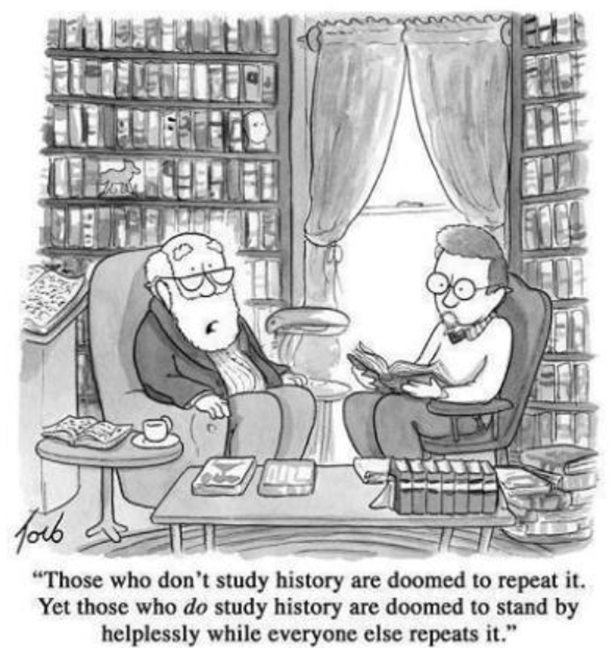
I believe that it is important to understand how we have gotten to where we are today if we are proposing to make changes, simply so that we can benefit from past learnings and avoid repeating mistakes at the expense of the community. I like to see evidence backing a proposal that commits significant community resources to doing something. Call me old fashioned (and people sometimes do) but I figure it is what a careful professional does.
Having always worked with public infrastructure, I know decisions made today have ramifications for another 50 to 100 years. No one builds a road or plants a tree thinking only about the next 5 years. I have cursed short cuts made decades ago by my predecessors when I have been required to sort out difficult problems. My approach is typically characterised by colleagues as time wasting in their haste to get on with trying out the latest management fad and, potentially, just doing wrong things righter.
This post is an attempt to unpick what has happened in Victorian local government to get us to where we are, and understand what it means for what councils should do next. My concern is that councils faced with the failure of existing approaches, as evidenced by the imposition of the rate cap (effectively a taxpayer revolt!), will then double down in doing the things that leaders know how to do. If it is not history repeating, it will at least be rhyming as Mark Twain observed. Better still, it is neither and it becomes informing.
Some history
It is tempting when thinking about local government today, and why it is the way it is, to go digging into the annals of history and track the many decisions that have impacted the sector over the last 100 or more years. After all, local government in Victoria started in 1854 and by 1862 concerns about performance led to the first major State government enquiry. Whatever the distant history is, I am sure the situation we are dealing with today has its origins in neoliberalism – the rejection of socialism after the second world war, and the belief that only free markets can allocate resources fairly and reward individuals for their efforts. Blame Friedrich Hayek for convincing us that only the profit motive can ensure justice and freedom because it dispassionately rewards people based on their contribution.
There is no doubt that the manifestation of neoliberal thinking evident in New Public Management (NPM) has dramatically changed public services. In Victoria, it has shaped local government through major reforms hatched in the mid-1980s by Premier John Cain when he appointed Stuart Morris to head the Local Government Commission and which were then delivered by the the Kennett government in the mid-1990s. Both sides of politics wanted to see councils be more effective in meeting community demands using less resources. It was the vanguard of NPM in Victorian public services, as local government often seems to be.
Today, the ideas of neoliberalism and NPM are being challenged and many of its reforms have been shown to be detrimental to the public interest and ineffective. In a recent public lecture in Melbourne, economist Mariana Mazzucato advocated ‘mission-led government’ as a way of responding to the fragmentation and disabling of public administration resulting from neoliberal thinking and NPM. This is similar to the thinking William Eggers and Donald Kettle are advocating in their recent book ‘Bridgebuilders’. As they explain, not only has government become less capable in recent decades, but the problems governments are expected to address have become more complicated.
The future
There are lots of academics applying scholarly thinking to explain what has happened to local government and advise on what is required now that local government performance is demonstrably inadequate to meet the challenges of the 21st century. Interestingly, Mariana Mazzucato says that local government is often the best place to test new ideas and learn before scaling those ideas up to state and national level. The role of local government in addressing the challenges that all governments face is noteworthy.
Typically, local government is seen as following and, more importantly, just doing what it is told by the central government, when it has the potential to lead change. Council leadership needs to shake itself out of its comfortable and safe thinking, stop trying to fly under the radar or blame the state, and take the initiative to lead reform of Australian public services. Professor Joseph Drew goes further to advocate that councils should be delivering more services than they currently do, and with less constraints, if governments are to be most effective and efficient in their contribution to the Australian economy.
So where should local government go from here?
It is important to understand the theories that have shaped current practice in order to increase the likelihood of further changes leading to improvement. Scholarly discourse is following numerous pathways towards improvement – New Public Governance (NPG), Digital Era Governance (DEG), New Public Service (NPS), and Public Value Pragmatism (PVP) to name a few. All are providing new ways of thinking about the role of government in making policy and delivering services. I think it is unlikely that a new regime or paradigm will suddenly sweep aside NPM and replace it. That might be desirable, but it is more realistic that elements of NPM will endure, the failed elements will be phased out, and demonstrably better ideas will gain currency. The hope of a new paradigm is likely to have mixed success.
What is apparent, is that the successor to NPM must be able to deal with fragmentation in service delivery, the involvement of free markets, and the need to build capability in public administrations.
References
‘Bridgebuilders – How Government can Transcend Boundaries to Solve Big Problems’, William D. Eggers and Donald F. Kettl, 2023
‘Reforming Local Government’, Joseph Drew, 2020
‘The Attempted Reforms of the 1980s’, Stuart Morris, in ‘Local Government Reform in Victoria’, Ed. Brian Galligan, 1998
‘The Mission-led Australian Tour’, Mariana Mazzucato, Melbourne, 14 March 2024
The Restructure of Local Government in Victoria: Principles and Programme, Local Government Commission, 1985
‘The Victorian Reforms in National and International Perspective’, Rolf Gerritsen, in ‘Local Government Reform in Victoria’ Ed. Brian Galligan, 1998
 Local Government Utopia