211 – Unpredictability, interdependence, complexity and chaos – why councils need to adopt the Third Principle: optimisation.

Posted by Lancing Farrell                                                                                              1200 words

the third principle

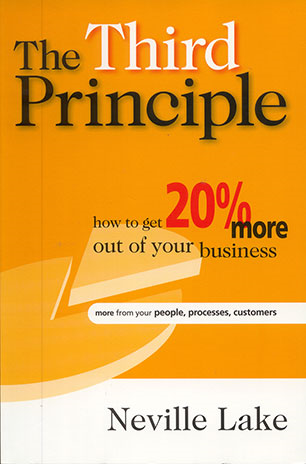
I recently rediscovered a book that I bought 17 years ago when it was first published. It is one of those useful management books that is an absorbing read when you buy it, and then it quietly sits on your shelf waiting for the day you really need it. It is now a book for the times with rate capping coming into Victorian local government.

Neville Lake’s central idea is that management practice has three fundamental organising principles – effectiveness, efficiency and optimisation. He believes that an organisation can be both effective and efficient but be sub-optimised. This leads to only 80% of its potential being realised.

The other 20% is trapped in processes that don’t work, management models that don’t deliver, and interactions with customers that fail to deliver expected value.

Having worked in local government for 30 years, I have to agree that we are sub-optimised organisations. Continue reading

204 – Rate capping: an update.

Posted by Whistler                                                                         900 words

service brainstorming 2

It has been some time since discussions commenced regarding the imposition of a rate cap on local government in Victoria. There have been a few earlier posts on the topic (see here, here, here, here and here). The rate cap has now been set and the process for any council seeking an exemption from the rate cap has been communicated. The Essential Services Commission has been effectively positioned as a regulator for local government. So what have councils been doing?

I would say not much. The requirement that the community support must be demonstrated if seeking an exemption, coupled with 2016 being an election year, has stifled activity across the sector. According to The Age newspaper 21 councils have indicated they may apply for an exemption. Some councils, including Melbourne City Council, have attempted to demonstrate community support for their rating strategy, which could support an application for an exemption from the cap.

The results from the few people’s panels held have been interesting but not unexpected. The community expects the council to use current resources well before asking for more. They want to see value for money before they will support asking people to pay more tax. Fair enough. Continue reading

200 – Using a local government service catalogue.

Posted by Colin Weatherby                                                                                                                         700 words

menu

Some time ago I discussed how to create a local government service catalogue. The process was simple and effective in describing services in customers’ terms and linking services to cost centres in the budget and those responsible for the cost centres. You might ask, what else needs to be done? Well, for the service catalogue to be really useful it needs to be linked to the organisational planning processes. Here’s how that can be done.

To begin, it is a good idea to test the service catalogue with the community. I have heard of a council using it to lead discussion with ‘peoples’ panels’ about the services delivered, how rates can best be spent, and whether or not the council should seek an exemption from the municipal rate cap being imposed in Victoria. If the community can relate to the services described in the catalogue and understand what they involve, it is likely that you have got the catalogue right. It doesn’t mean that it can’t be further improved, but it is a good start.

The next step is to link the service catalogue to the traditional ‘business unit by business unit’ planning that occurs in local government. Continue reading

194 – Essay No. 4 – Local government and customer service.

Posted by Lancing Farrell                                                                              4500 words

basil fawlty

Customer service is, and should be, a major concern for local government. After all, councils are service organisations. Sometimes there is confusion about exactly what customer service means, how it relates to public service delivery, and what aspects of service are most important to get right in local government.

This essay focuses on three hypotheses:

  1. That ‘customers’ in local government are different to the customers described in most customer service literature and encountered by most service organisations.
  2. There are six main opportunities for local government to improve service to customers.
  3. There are simple tools available that can assist councils in getting service delivery and customer service right.

Continue reading

175 – In-vehicle GPS – Part 1: Why every council should have it.

Posted by Lancing Farrell                                                                                              1100 words

in vehicle gps

I remember looking at in-vehicle monitoring devices in the 1990’s. The technology was basic and there was no 4G network. Since then councils have flirted with in-vehicle GPS. As far as I know, no council in Victoria has installed it throughout their vehicle fleet. This is partially explained by the industrial relations implications (see the next post) but I think it is really explained by the lack of focus on customer service and productivity that pervades the sector. Rate capping will change that.  Most councils wouldn’t even be aware of the potential benefits from the technology. Hence this post.

So, what are the features and benefits of in-vehicle GPS that councils should be thinking about? Continue reading

152 – Rate capping – an inconvenient fact.

Posted by Whistler                                                                          220 words

ESC table 2.3 forecast rate cap

Image source

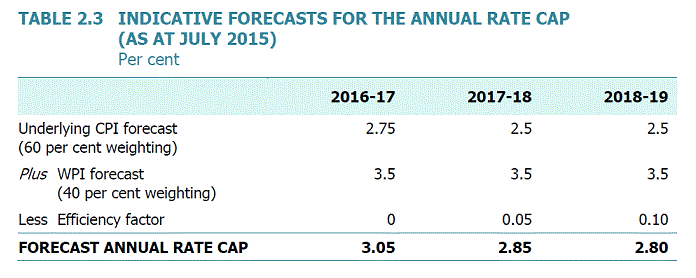
Lancing Farrell has made some good points in her post about rate capping. I think the ESC has been optimistic. The impact of application of the CPI and WPI and the Efficiency Factor is likely to be more significant for many councils, particularly large urban councils.

The main reason I say this is that the average of 40 % of expenditure on labour costs doesn’t reflect the reality of many councils. For many it is 55 to 60%. This means that a significant part of their labour costs will be adjusted for CPI, not the higher WPI. I have reproduced the table from Lancing Farrell’s post above.

I have produced my own table comparing a council that has 60% labour costs. Continue reading

150 – ‘Muzzle on council rates’. The Age, 31 July 2015.

Posted by Colin Weatherby                                                                         800 words

muzzle

The pressure is on. The Essential Services Commission has released its draft report on the proposed rate capping for councils in Victoria. It has a number of interesting elements and some significant implications for local government. The report sets out which revenues are proposed to be capped, how the rate cap could be calculated, the current forecast for rate increases to 2018/19 under the proposed system (see below), and the impact of the application of an ‘efficiency factor’ to provide an incentive to pursue efficiencies.

The article in The Age describes the major impacts.

“Victoria’s 79 councils had an average rate increase of 3.8 per cent this year. Several councils increased their rates by more than 6 per cent.

The draft report includes indicative forecasts for an annual rate cap of 3.05 per cent in 2016-17, dropping to 2.85 per cent in 2017-18 and 2.8 per cent in 2018-19.

In addition to the cap, the review calls for a new “efficiency” deduction to be introduced from 2017-18 where councils would need to reduce their rates bill by 0.05 per cent because of efficiencies (increasing by 0.05 percentage points each year). Jason Dowling, The Age, 31 July 2015.

So, what are the likely implications for councils?

There have been some previous posts on this topic (see  Council rates capped from mid-2016’, The Age, 21 January 2015 and Labor’s rate cap to hurt services and infrastructure, ratings agency warns’, The Age, 27 February 2015.). That thinking still stands. Councils will have to say ‘no’ louder and more often. Difficult choices will need to be made about what services to offer or not offer, and what the levels of service will be. Some people will no longer be eligible for services as councils start to distinguish more strongly between those who are or are not customers. Expect much more customer segmentation for services delivery. All of this will be difficult for our politicians who succeed by pleasing their constituents.

In many ways this is the easy bit Continue reading

115 – Roadmap, recipe or game plan. Does it matter which metaphor you use?

Posted by Whistler                                                                            360 words

neverland cake

There are various metaphors for organisational strategy in circulation. The idea that it is a road map for a journey to a predetermined destination undertaken in a car while watching the dashboard (to know the car is working properly) is popular. One I was less familiar with is Norton and Kaplan’s cooking metaphor.

They describe an on organisation is an assemblage of ingredients brought together to make a meal. Making the meal requires raw materials (ingredients), tangible capital and assets (cooking implements, an oven), and intangible human assets (the chef). A great meal requires a recipe to take advantage of these tangible and intangible assets. The recipe transforms assets that each has standalone value into a great meal with greater combined value. The recipe corresponds to an organisational strategy that combines resources and capabilities to create unique value.

Another metaphor that I relate to is the game plan. Continue reading

53 – Coffee, basketball and privatisation. What significance could they have for Australian local government?

Posted by Colin Weatherby                                                                                    1000 words

the barista economy

Image from The Age, 11 March 2015

On the 11 March 2015 there were three articles in the Melbourne Age newspaper on different topics that each held a message of potential relevance for local government.

The first was ‘Welcome to the barista economy. The article is based on a speech by Christopher Kent from the Reserve Bank of Australia (RBA) who looked at changes in household expenditure patterns over the past 30 years.

One thing is clear: we are spending a lot more on ‘services’ than we are on ‘stuff’. The share of household spending on services is up from 53 per cent to 65 per cent of household consumption.

The RBA explains the increased spending on services as a result of cheaper goods because of better productivity and more goods coming from ‘emerging economies’. The world has become better at producing goods and people now have more money to buy services, which in effect is buying time. We can afford to employ someone to perform tasks when our time is better spent on other activities, we don’t have the skills, or it improves our quality of life (e.g. leisure).

The barista connection highlights the growth in service industry jobs. Coffee shops are everywhere. Having a coffee has become part of every outing.

I think that the significance for local government is twofold. Continue reading

49 – Rate capping. Four workarounds we can expect to see.

Posted by Whistler                                                                          320 words

illusion

Image from http://serendip.brynmawr.edu

All the talk about rate capping and the impact on local government services has started me thinking about what happens every time there are legislated changes to the way councils operate. We find workarounds. Rather than putting our efforts into being better at providing the services that communities expect, we put our energy into workarounds to protect the status quo.

Workaround number 1. Service lives for assets will be pushed out unrealistically to reduce the annual depreciation cost. Instead of depreciating assets over 50 years they will be depreciated over 100 years, effectively halving the depreciation cost.

Workaround number 2. Staff numbers will be cut to make budget and agency staff and consultancy costs will rise significantly. A lower cost but permanent part of the workforce will be replaced with a much more expensive but temporary workforce. The over expenditure will be offset by workaround number 1.

Workaround number 3. Asset sales will be included in the budget. This will usually be land determined to be surplus to requirements (probably used as open space at the moment) or the vehicle fleet (which will then be leased). It is unlikely that the land will actually be sold and this will be explained in notes to the annual report as an unforseen problem. Never mind, put them in again next year. I worked at a council that successfully did this for a decade. Selling assets like the fleet will probably realise a loss but provide some short term cash while increasing long term costs.

Workaround number 4. CEO and Executive salaries will be frozen. No Consumer Price Index or ‘performance’ increases. This sounds fine and could be an example of leadership from the front to control wage increases across the organisation.  But keep an eye on their contract renewals. Typically this is where top management makes up for any lack of annual increase and the details are usually confidential.  No increases for several years and then a big increase on rehiring.