2200 words (20 minutes reading time) by Carole Parkinson
Podcast option:
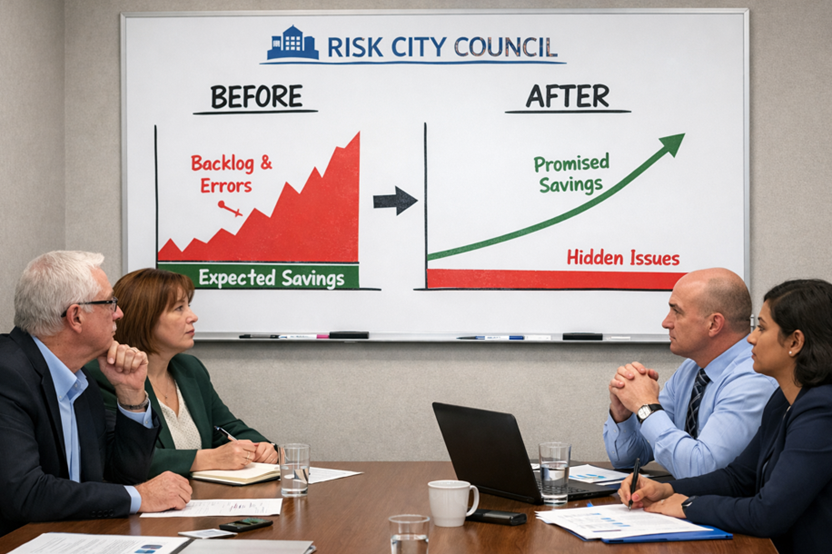
Credit: ChatGPT
In a nutshell…
This post explores the risks and pitfalls associated with large-scale IT investments in local government. It argues that councils often rely on technology and automation to fix financial deficits or service inefficiencies without first optimising their underlying processes. Drawing on expert theories, the post suggests that these ambitious projects frequently over-promise and under-deliver by ignoring the complexities of human-technical systems. To avoid failure, Parkinson recommends that leaders adopt a skeptical mindset, demand evidence-based service studies, and implement incremental project stages. Ultimately, Parkinson emphasizes that improving service design from a resident’s perspective is more effective than simply digitising outdated methods.
Introduction
“I voted for the IT project because the business case promised the budget would balance by year four. But no one told us what we’d do if the savings didn’t arrive. In the end, we automated our inefficient services instead of fixing them. It has now cost us more money than we have saved!
We should have demanded a service study to improve services first, limited the project scope, put a ‘kill-switch’ in place, and made sure the CEO had an effective early warning system in place for failure.”
Councillor
The lesson?
Big IT doesn’t fix services; it just automates them. You can make governance improvements to reduce the odds of an expensive disappointment.