152 – Rate capping – an inconvenient fact.

Posted by Whistler                                                                          220 words
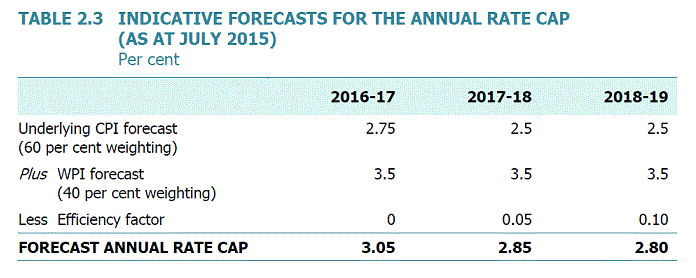
ESC table 2.3 forecast rate cap

Image source

Lancing Farrell has made some good points in her post about rate capping. I think the ESC has been optimistic. The impact of application of the CPI and WPI and the Efficiency Factor is likely to be more significant for many councils, particularly large urban councils.

The main reason I say this is that the average of 40 % of expenditure on labour costs doesn’t reflect the reality of many councils. For many it is 55 to 60%. This means that a significant part of their labour costs will be adjusted for CPI, not the higher WPI. I have reproduced the table from Lancing Farrell’s post above.

I have produced my own table comparing a council that has 60% labour costs. Continue reading

118 – Improving service operations. Why it doesn’t happen in local government.

Posted by Whistler                                                                                          500 words

 walking the plank

I have read Lancing Farrell and Colin Weatherby’s posts on characteristics of demands, redesigning operations and improving service operations through action plans and service redesign, with some interest. It is all good stuff and not too difficult to understand or do. The question I ask myself is why I don’t see it happening everywhere across the sector. The ‘special and different’ posts partially explain it but I think there is more to it.

To begin with, the motivation to make improvements doesn’t really exist. People say they want to improve the quality of services to their community, and in response to threats like rate capping they say they want to be more efficient. But they don’t really want to do either.

Most councils have the potential to improve productivity by 10-15% (more in some councils). Continue reading