212 – How do you know if you work for (or if you are) a pretend manager?

Posted by Whistler                                                                                                          1200 words

pretend manager

Have you ever wondered if your manager is for real? Have you ever wondered what they do all day? Has their contribution to work been difficult to see? Maybe you have a pretend manager.

No, this is not a manager bashing exercise. As a long-term local government manager, I respect the effort put in by many of my colleagues. But there are some managers who are just not up to it. And they are not always managers.

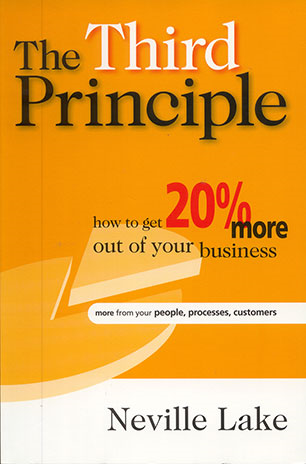
Lancing Farrell discussed an interesting book in the last post. I also took a trip down memory lane and re-read parts of The Third Principle. Neville Lake is a practical, perceptive and prescient person. I just love alliteration. His chapter on optimising managers, highlighted by Lancing Farrell, reads as though he looked into the future to see the local government of today. In particular, the sections on eliminating pretend managers and pretend managing resonated with me.

To optimise managers, Lake says you need to eliminate pretend managing and pretend managers.

To start with, Lake says to look for the managers who think their job is to go through the motions of managing and just tick off boxes. Continue reading
211 – Unpredictability, interdependence, complexity and chaos – why councils need to adopt the Third Principle: optimisation.

Posted by Lancing Farrell                                                                                              1200 words

the third principle

I recently rediscovered a book that I bought 17 years ago when it was first published. It is one of those useful management books that is an absorbing read when you buy it, and then it quietly sits on your shelf waiting for the day you really need it. It is now a book for the times with rate capping coming into Victorian local government.

Neville Lake’s central idea is that management practice has three fundamental organising principles – effectiveness, efficiency and optimisation. He believes that an organisation can be both effective and efficient but be sub-optimised. This leads to only 80% of its potential being realised.

The other 20% is trapped in processes that don’t work, management models that don’t deliver, and interactions with customers that fail to deliver expected value.

Having worked in local government for 30 years, I have to agree that we are sub-optimised organisations. Continue reading

210 – Is innovation over-rated in local government?

Posted by Colin Weatherby                                                         1100 words

patched road

I was recently reading an article in Aeon magazine entitled ‘Hail the maintainers’. The central idea is that ‘capitalism excels at innovation but is failing at maintenance, and for most lives it is maintenance that matters more’. I think you could replace ‘capitalism’ with ‘local government’, although I am not sure that we are excelling. We are certainly preoccupied with trying to be innovative (or at least being seen to be innovative).

The authors, Lee Vinsell and Andrew Russell, believe that innovation is the dominant ideology of our era. Pursuing innovation has inspired both technologists and capitalists. It has also attracted critics.

“What happens after innovation, they argue, is more important. Maintenance and repair, the building of infrastructures, the mundane labour that goes into sustaining functioning and efficient infrastructures, simply has more impact on people’s daily lives that the vast majority of technological innovations. “

The idea that local government must be more innovative reflects the willing (and often mindless) adoption of populist ideas from the private sector by local government.   After all, being innovative is sexier than doing what we have always done but making sure we do it well. Continue reading

209 – Local government and humour – sometimes you just have to laugh.

Posted by Whistler                                                                                               400 words

Geelong Mayor

Image – The Geelong Advertiser, 2 April 2016.

There have been a number of humorous posts in the life of Local Government Utopia. And sometimes you do just have to laugh. Humour is often used in a uniquely Australian way to make a point. Often the point is quite serious, a I think it usually is in the case of local government.

For example, whilst the Mayor of Geelong, Darryn Lyons (aka ‘Daz’), parades as a figure of fun, the Council he leads is far from funny. If media reports are accurate, it is about to be sacked for bullying, poor leadership, and a general lack of competence. You could be forgiven for thinking that it was a mistimed April Fools’ day joke.  Many of his constituents think he is marvellous.  Some find this surprising but I think it goes to a fundamental and unfortunate truth about how local government is viewed by many in the community

A colleague related a story to me about the Mayor of Geelong.   Continue reading